
Many people have contact with wild animals and, especially if the animals are young, are tempted to take them home as pets. Baby animals are often cute, cuddly and responsive to attention. The temptation to remove them from their natural environment can be very strong, but before you try to make a pet out of a wild animal, please consider the following:
Most wild animals will not live very long in our normal household surroundings. Baby animals that do survive will undergo a drastic behavioral change as they become adults. They often become very aggressive and continually try to escape back to the out-of-doors. A tailor-made pet does not result from declawing, descenting, neutering or removing fangs from a wild animal. In addition, attempting to return such animals to the wild when their behavior becomes intolerable is actually a death sentence.
The dietary requirements of most wild animals are different from domestic pets. An improper diet can result in serious nutritional deficiencies such as rickets and other crippling conditions.
Most wild animals are normally most active at night. This perfectly normal behavior can be very disruptive to persons trying to sleep and attempts to change it may be very frustrating to the animal itself.
Many diseases which affect people can be carried even by healthy-looking wild animals. Rabies is one such disease and others include leptospirosis, tularemia and plague. Preventive vaccines against these diseases are not approved for use in wildlife.
Most wild animals are protected by various federal and state laws and permission from the proper authorities must be obtained before keeping a wild animal.
When you are tempted to take home a wild animal for a pet, ask yourself these questions:
* Is what I am doing legal?
* Am I willing to risk the health, and possibly the life, of myself and my family?
* Am I willing to risk destroying the animal?
* Am I willing to change my lifestyle to conform to the animal's natural and unalterable behavior?
If you cannot truthfully answer "yes" to each question, do not attempt to keep a wild animal as a pet.
Jul 15, 2005


Identified
The 2 unidentified birds are Brown-headed cowbirds.
One is not doing well, nor is the Mockingbird.
The other Chimney Swift died late yesterday afternoon.
Suspecting West Nile according to the symptoms.
One is not doing well, nor is the Mockingbird.
The other Chimney Swift died late yesterday afternoon.
Suspecting West Nile according to the symptoms.
Jul 14, 2005
Released today:
Released the 4 Sparrows and the Inca Dove this morning.
The 2 Chimney Swifts are not doing well, they stopped chattering and taking food.
1 of the 3 unidentified birds passed away 10 minutes ago. Metabolic bone disease.
Noon update: 1 of the Chimney swifts didn't make it, the other one is still refusing to eat...
The 2 Chimney Swifts are not doing well, they stopped chattering and taking food.
1 of the 3 unidentified birds passed away 10 minutes ago. Metabolic bone disease.
Noon update: 1 of the Chimney swifts didn't make it, the other one is still refusing to eat...
Jul 12, 2005
New Arrivals and Updates
Received 3 cottontails, about 2 weeks old, good shape.
Received a juvenile skunk with obvious signs of rabies; referred to animal control.
4 sparrows will need another 3 - 5 days before release; all are doing fine.
Mockingbird juvenile finally opened beak for me to feed after 2 days of forcefeeding.
The 3 not identified birds are filling in feathers: black with brown tips and streaks, spotted belly, naked face, no yellow on beak, red legs.
2 Chimney Swifts are opening their eyes; 7 days old.
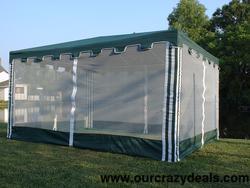
2 opossums are outside in the new screen room. Since they can't climb, the largest place I had was a plastic dog pool. Filled with sheets and top of dog crate for den, covered with deer netting; they seem to love it.
Received a juvenile skunk with obvious signs of rabies; referred to animal control.
4 sparrows will need another 3 - 5 days before release; all are doing fine.
Mockingbird juvenile finally opened beak for me to feed after 2 days of forcefeeding.
The 3 not identified birds are filling in feathers: black with brown tips and streaks, spotted belly, naked face, no yellow on beak, red legs.
2 Chimney Swifts are opening their eyes; 7 days old.
2 opossums are outside in the new screen room. Since they can't climb, the largest place I had was a plastic dog pool. Filled with sheets and top of dog crate for den, covered with deer netting; they seem to love it.
Jul 9, 2005
Doves
Helping some of Mother Nature's most frequently orphaned baby birds
With spring comes baby birds, and for many a few short weeks is a long life. Predators raid the nest, storms blow the nest out of trees, too active babies fall from the nest, and an assortment of other tragedies take lives. Sometimes humans can and do make a big difference in whether or not a baby bird survives.
Why bother? Because it makes a difference of life and death to the little one in trouble; because songbirds are on the decline nationwide and saving one of any species seems to be important, and in this violent world of ours, saving something more fragile than ourselves brings out the best in us. Of that, we cannot get or have enough!
It is against the law in most states to pick-up a baby bird and keep it for more than 24 hours. Unless you are a licensed rehabilitator, you may not have the knowledge and expertise to raise a baby bird, and you probably do not have the time. Baby birds require almost constant attention, feeding, and cleaning from sun-up to sun-down for a minimum of two weeks and usually longer. Finding a rehabilitator is as close as your closest nature center, natural museum, humane society or animal control.
There are various techniques that have proven successful in raising orphaned baby birds of different species. If you are sincerely interested in raising even a few songbirds each season, volunteer to help a local rehabilitator who is overrun at this time every year with hungry mouths, get a rehabilitation license and enroll in a course of two to learn the basics so you can make a real difference in the wildlife in your backyard. Check with continuing education course offerings at your local community college or university, or nature center. Work with an experienced wildlife rehabilitator and or veterinarian who treats injured and orphaned wild creatures or better yet work with both of them to get "hands-on" experience.
Formulas are not listed in order of effectiveness. All have been used, tested, and proven successful.
These are by no means the only nutritionally sound feeding formulas. These are just some of those that the North American Wildlife's Health Care Center's rehabilitation network have used repeatedly.
Baby mourning dove feeding formula
North American Wildlife Health Care Center's dove formula
Wild doves nest up to five and six times yearly. During each nesting period, babies blow out of nests during storms, perch perilously on the nest's edge, and fall to the ground before their wings will carry them into flight.
If the young dove is too young to eat grass seeds and grain off the ground, it will have to have human help to survive.
A successful feeding formula includes
1/2 cup soaked chicken starter or turkey starter, or wild game bird starter and grower,
1/4 cup Hi-Protein baby cereal
1 tsp. Brewers' yeast (supplies Vitamin-B complex)
1 tsp. Vionate (vitamins)
1 jar baby egg yolk or 4 oz. egg yolk (hard-boiled)
1 tsp unflavored gelatin
1/4 tsp. wheat germ flakes
1/4 tsp. powder
1 tsp. dyne (stat) balances electrolytes, and supplies needed vitamins and minerals. Check with your "vet". Many refer to the product as STAT.
Baby doves need to be fed no more than five to six times in a 24 hour period. They have a large crop that stores food.
Warm only what is to be fed each feeding, and keep the remaining refrigerated.
Feed until the crop feels like a soft balloon inflated. Do not feed until the crop feels stretched and tight.
Baby dove feeding formula #2
The Brukner Nature Center Primer of Wildlife Care and Rehabilitation by Patti L. Raley 2nd edition.
1 cup High Protein dog food softened in water
1/2 cup turkey starter
2 hard-boiled eggs, crumbled
2/3 cooked Roman Meal cereal
1 teaspoon dolomite vitamin/mineral mix berries
Lactobacillus
Combine ingredients thoroughly. Separate into individual portions and freeze until needed. Thawed mix will keep up to three days in refrigerator. Moisten with water or fruit juice to feed with a syringe. Give small amounts of water after each feeding.
Baby dove feeding formula #3
From Wild Animal Care and Rehabilitation, Kalamazoo Nature Center, Fourth edition.
2 tbs. fine ground 8-in-1 Mynah Bird Food
1 tbs high protein baby cereal
1 tbs. wheat germ
1 tbs. corn meal
1 teaspoon hard-boiled or baby food egg yolk
2 to 3 drops balanced avian vitamins.
Grind 8-in-1 Mynah Bird Food or you may use unmedicated chick started in a blender. Combine this with high protein baby cereal, wheat germ, corn meal, egg yolk and vitamins. Mix with water until mixture is thick and soupy. As baby matures add sees such as millet or parakeet seeds. Doves need to be fed only four to five times during daylight hours. Do not overfeed. The crop need to have some food in it always. The crop deflates at night.
MacLeod baby dove feeding formula #4
Leslie MacLeod is the wildlife coordinator for the North American Wildlife Health Care Center, a state and federally licensed wildlife rehabilitator with some 10 years experience.
1 jar baby beef (baby food)
1 tbs. finely (yellow or white)
1 hard-boiled eggs, crumbled (white and yolk),
1/4 tsp. wheat germ flakes, 1/4 tsp. brewers yeast (supplies B-complex vitamins)
1/2 inch ribbon of nutrical squeezed from tube.
Mix with pedialyte until mixture is a medium consistency syrup.
When the baby is at least half feathered, add just a pinch of fine grit to formula to keep the crop working well.
By the time the baby is about 10 days old, feathers are beginning to unfurl in the wings, the diet should be about 80 percent of the above formula with 20 percent made up of very small polished finch seed.
Feed at room temperature. Stores well in freezer for individual portions. Thaw one feeding at a time.
Feed baby no more than five to six times in a 24 hour period. Pigeons and doves beg even when not hungry.
With spring comes baby birds, and for many a few short weeks is a long life. Predators raid the nest, storms blow the nest out of trees, too active babies fall from the nest, and an assortment of other tragedies take lives. Sometimes humans can and do make a big difference in whether or not a baby bird survives.
Why bother? Because it makes a difference of life and death to the little one in trouble; because songbirds are on the decline nationwide and saving one of any species seems to be important, and in this violent world of ours, saving something more fragile than ourselves brings out the best in us. Of that, we cannot get or have enough!
It is against the law in most states to pick-up a baby bird and keep it for more than 24 hours. Unless you are a licensed rehabilitator, you may not have the knowledge and expertise to raise a baby bird, and you probably do not have the time. Baby birds require almost constant attention, feeding, and cleaning from sun-up to sun-down for a minimum of two weeks and usually longer. Finding a rehabilitator is as close as your closest nature center, natural museum, humane society or animal control.
There are various techniques that have proven successful in raising orphaned baby birds of different species. If you are sincerely interested in raising even a few songbirds each season, volunteer to help a local rehabilitator who is overrun at this time every year with hungry mouths, get a rehabilitation license and enroll in a course of two to learn the basics so you can make a real difference in the wildlife in your backyard. Check with continuing education course offerings at your local community college or university, or nature center. Work with an experienced wildlife rehabilitator and or veterinarian who treats injured and orphaned wild creatures or better yet work with both of them to get "hands-on" experience.
Formulas are not listed in order of effectiveness. All have been used, tested, and proven successful.
These are by no means the only nutritionally sound feeding formulas. These are just some of those that the North American Wildlife's Health Care Center's rehabilitation network have used repeatedly.
Baby mourning dove feeding formula
North American Wildlife Health Care Center's dove formula
Wild doves nest up to five and six times yearly. During each nesting period, babies blow out of nests during storms, perch perilously on the nest's edge, and fall to the ground before their wings will carry them into flight.
If the young dove is too young to eat grass seeds and grain off the ground, it will have to have human help to survive.
A successful feeding formula includes
1/2 cup soaked chicken starter or turkey starter, or wild game bird starter and grower,
1/4 cup Hi-Protein baby cereal
1 tsp. Brewers' yeast (supplies Vitamin-B complex)
1 tsp. Vionate (vitamins)
1 jar baby egg yolk or 4 oz. egg yolk (hard-boiled)
1 tsp unflavored gelatin
1/4 tsp. wheat germ flakes
1/4 tsp. powder
1 tsp. dyne (stat) balances electrolytes, and supplies needed vitamins and minerals. Check with your "vet". Many refer to the product as STAT.
Baby doves need to be fed no more than five to six times in a 24 hour period. They have a large crop that stores food.
Warm only what is to be fed each feeding, and keep the remaining refrigerated.
Feed until the crop feels like a soft balloon inflated. Do not feed until the crop feels stretched and tight.
Baby dove feeding formula #2
The Brukner Nature Center Primer of Wildlife Care and Rehabilitation by Patti L. Raley 2nd edition.
1 cup High Protein dog food softened in water
1/2 cup turkey starter
2 hard-boiled eggs, crumbled
2/3 cooked Roman Meal cereal
1 teaspoon dolomite vitamin/mineral mix berries
Lactobacillus
Combine ingredients thoroughly. Separate into individual portions and freeze until needed. Thawed mix will keep up to three days in refrigerator. Moisten with water or fruit juice to feed with a syringe. Give small amounts of water after each feeding.
Baby dove feeding formula #3
From Wild Animal Care and Rehabilitation, Kalamazoo Nature Center, Fourth edition.
2 tbs. fine ground 8-in-1 Mynah Bird Food
1 tbs high protein baby cereal
1 tbs. wheat germ
1 tbs. corn meal
1 teaspoon hard-boiled or baby food egg yolk
2 to 3 drops balanced avian vitamins.
Grind 8-in-1 Mynah Bird Food or you may use unmedicated chick started in a blender. Combine this with high protein baby cereal, wheat germ, corn meal, egg yolk and vitamins. Mix with water until mixture is thick and soupy. As baby matures add sees such as millet or parakeet seeds. Doves need to be fed only four to five times during daylight hours. Do not overfeed. The crop need to have some food in it always. The crop deflates at night.
MacLeod baby dove feeding formula #4
Leslie MacLeod is the wildlife coordinator for the North American Wildlife Health Care Center, a state and federally licensed wildlife rehabilitator with some 10 years experience.
1 jar baby beef (baby food)
1 tbs. finely (yellow or white)
1 hard-boiled eggs, crumbled (white and yolk),
1/4 tsp. wheat germ flakes, 1/4 tsp. brewers yeast (supplies B-complex vitamins)
1/2 inch ribbon of nutrical squeezed from tube.
Mix with pedialyte until mixture is a medium consistency syrup.
When the baby is at least half feathered, add just a pinch of fine grit to formula to keep the crop working well.
By the time the baby is about 10 days old, feathers are beginning to unfurl in the wings, the diet should be about 80 percent of the above formula with 20 percent made up of very small polished finch seed.
Feed at room temperature. Stores well in freezer for individual portions. Thaw one feeding at a time.
Feed baby no more than five to six times in a 24 hour period. Pigeons and doves beg even when not hungry.
Jul 8, 2005

New Arrivals
Daily Chart:
4 sparrows, 1 week old
2 chimney swifts, 2 days old
3 crow size birds, about 1 week, brownish/orange skin, feet
same color, wing feathers black/blue/brown, insect eaters, long legs.
1 cottontail, opened eyes today
2 opossums, 5 months, not releasable, crippled
-------------------------------------------------------
4 sparrows, 1 week old
2 chimney swifts, 2 days old
3 crow size birds, about 1 week, brownish/orange skin, feet
same color, wing feathers black/blue/brown, insect eaters, long legs.
1 cottontail, opened eyes today
2 opossums, 5 months, not releasable, crippled
-------------------------------------------------------
| ||||||||||||||||||||||||||||||||||||||||||||||||||||||||||||||||||||||
| ||||||||||||||||||||||||||||||||||||||||||||||||||||||||||||||||||||||


Jul 6, 2005
Skunk Myths
|
|

Subscribe to:
Posts (Atom)
