Mar 9, 2009

Baby Squirrels, Baby Cottontails, Trinity, Boy Scouts

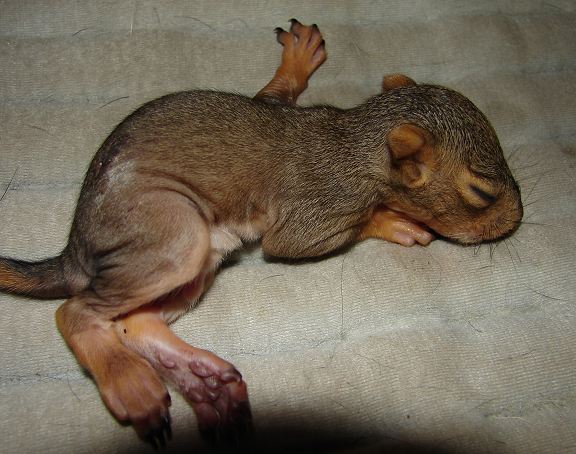
3 days ago I received 3 squirrels of about 5 weeks, eyes fully open. A playhouse was taken down and moved to another city. On arrival, the babies were discovered. They were a bit dehydrated and scared, but otherwise in good shape.

Yesterday, I received 2 more babies with their eyes still closed, but about to open any day now. They are close to 4 weeks old and also in very good shape.


I also received 2 baby cottontails (in addition to the one I already have for a few days and who is doing great!) with their eyes still closed and badly injured by a dog. They are also very dehydrated and starved, so I don't have much hope for them, but that won't keep me from trying to help them.

The Boy Scouts have also been busy building a flight cage for the Rainbow Wildlife Rescue, so that I can apply for the federal bird permit:


And last but not least, Trinity together with her mother Honey in their new forever home:


Mar 6, 2009

Orphaned Cottontail first Baby of 2009

His mother and siblings found an unfortunate end under a lawn mower, but this baby was saved:


He had one eye open when I got him, now both eyes are open, which is the most critical time. So far, everything looks good.

Mar 1, 2009

Trinity, Boy Scouts, Federal Permit

Yesterday, Trinity had her stitches removed and received the green light to start rehab. I started her exercise on the treadmill and we will go water treading tomorrow, when it's warmer. She is doing so great! In a week, 2 the most, she will be moving in with her new forever home!


The Boy Scouts, led by an Eagle Scout (I really need to learn the ranks and functions of the Scouts, so I can do them justice!) came by yesterday and stayed for a few hours to start building on the flight cage. I need an 8 x 16 x 8 foot enclosure so I can finally apply for the federal bird permit which will enable me to accept songbirds and waterfowl.

Here is a little movie of the boys working hard. They have yet to raise the netting material in order to finish the flight cage and I'm looking forward to them coming over again. They are such a delight. Kids are so curious and I always find some ears to listen to some animal stories which I try to combine with some education.


Feb 20, 2009

Trinity is home after hip surgery

I just picked up Trinity from the vet a day after her hip surgery. Read more about it here!
Thanks to a fundraiser we were able to get her the best care. Thank you to everybody who got involved!!!


Feb 18, 2009

Trinity one day before the Surgery Video

Rainbow Wildlife Rescue in the News

Abilene Reporter News: http://www.reporternews.com/news/2009/feb/17/leave-the-mothering-to-nature/
Empire Tribune (FREE subscription only): http://www.empiretribune.com/articles/2009/02/17/news/doc499979185e5e6763148526.txt

Leave the mothering to nature

Experts say young animals who appear to be abandoned often are in parents' care

Courtesy photo Opossums being cared for by Erath County wildlife rehabilitator Birgit Sommer.

Courtesy photo Opossums being cared for by Erath County wildlife rehabilitator Birgit Sommer.

Courtesy photo An opossum being cared for by Erath County wildlife rehabilitator Birgit Sommer.

Courtesy photo An opossum being cared for by Erath County wildlife rehabilitator Birgit Sommer.

Courtesy photo Birgit Sommer, a wildlife rehabilitator in Erath County, says she also cares for domesticated animals.

Courtesy photo Birgit Sommer, a wildlife rehabilitator in Erath County, says she also cares for domesticated animals.

Spring is just around the corner, and as the new season arrives so do the offspring of a variety of wildlife.

Kindhearted humans sometimes find -- and try to take in -- young birds, squirrels, fawns or rabbits that appear to be abandoned.

Roy Johnson, Taylor County game warden, said most of the time this is not the case.

"Mother Nature has a way of taking care if itself," Johnson said. "If you see a fawn, I promise you the mama has not abandoned it. She will come back and take care of it."

He said the same is true for other animals.

Johnson said the exception is when someone sees a dead mother. The fawn will not leave it, and in that case, the fawn should be taken to a licensed rehabilitator -- but those are hard to find.

"There are no rehabilitators in Abilene. The closest is Breckenridge or Baird," Johnson said. "I've encouraged four people to get a license, but they don't follow through because it is extremely difficult to obtain and it's at their own expense."

Johnson said to find someone in the area, go to www.tpwd.state.tx.us -- but be prepared to drive to them or to meet them somewhere.

Sometimes, he said, fawns can be seen lying on or near the road. To keep them from being injured, they can be moved and placed over a fence.

"It's a rumor that a deer won't come back to its baby once it's been touched by humans," Johnson said. "That's not true."

Birgit Sommer, a licensed wildlife rehabilitator in Erath County, said the same is true for most animals. The human touch myth is "just an old wives' tale." And if a baby is found, it's best to try and reunite with the mother if possible.

Sommer specializes in caring for squirrels, but also cares for other wild critters and all kinds of domesticated animals.

She said February is the time of year when young squirrels are often knocked out of their nests. The best policy she said is to place the baby squirrel in a shoe box at the base of the tree where it was found. Because they chill easily, a plastic bottle can be filled with warm water and wrapped in a T-shirt to keep the young animal warm. Sommer said to avoid using terry cloth in the box because the tiny claws will become snagged.

If the baby squirrel could be in danger from predators, such as dogs, tie a basket to the tree.

Most likely, the mother will come back for her offspring if she feels safe to do so; it is best to observe from a distance.

It's a different matter for baby squirrels found during the evening hours.

"Squirrel mothers will not come back at night, so try putting it out first thing in the morning," Sommer said.

Squirrel feeding is difficult, so it's best to take the young to a trained professional because they aspirate easily, she said.

Sommer also has raised opossums successfully. She noted that opossums often are often struck and killed by automobiles.

She said that if an animal is hit, it's good to check the pouch for surviving babies.

"These are the only marsupials in North America and often times, the infants will still be alive -- protected by the pouch," Sommer said. "And they are not known to carry rabies, either."

Baby birds

Young birds are commonly found on the ground, she said.

"Fledglings may look like they are unable to be on their own, but the parents are still caring for these fledglings and keep track of where they are. So the baby bird you see may be a fledgling that is being taken care of by its parents still."

Sommer said that if the bird is not fully feathered, the best thing to do is to put it back into the nest.

"A baby bird might need to eat every 20 minutes in daylight hours depending on its age and species," Sommer said. "The parents can take care of it so much better than you can."

Sommer cautions that if people find wild baby bunnies during the day, "leave them alone." Many folks think they have been abandoned and most times they have not, she said.

Rabbits don't feed their young very often and usually only nurse for about five minutes a day, returning to the nest only once or twice in a 24-hour period.

"If the babies' bellies look plump, then they've been fed," Sommer said. "If a nest has been destroyed, you can rebuild it within 10 feet of its original spot."

Sommer said that if you know for certain that the mother rabbit is dead, locate a rehabilitator because infant rabbits have a high mortality rate, especially cottontails.

Following the law

Johnson, the game warden, said it is against the law to keep any live game animal and that should be considered when someone is contemplating keeping a baby animal they've found.

Before she gained her license, Sommer said, the Erath County game warden fined her $150 for caring for baby squirrels and the action prevented her from obtaining the license for one year.

She said the licensing process is incredibly difficult and because of the expense of buying formula and building shelters, etc., she believes this is why there are so few licensed rehabilitators.

For more information on animals or guidance in acquiring a license, contact Sommer at www.rainbowwildlife.com.

Feb 16, 2009

Found a Baby Squirrel? Here is Help!

One woman’s mission, one baby squirrel at a time

By ALEX HARMON
Special Contributor to the Empire Tribune
Published: Monday, February 16, 2009 8:58 AM CST
Some folks in Erath County may call her a nut, but when it comes to squirrel rescue, Birgit Sommer knows her stuff. As a licensed rehabilitator and founder of Rainbow Wildlife Rescue in Stephenville, Sommer has worked with dozens of squirrels endangered by natural disaster, injury or who have become separated from their parents.

“There are many key mistakes that people make when trying to rescue a baby squirrel and I want to help set the record straight,” Sommer said. “Although these tiny babies are adorable, they are not domesticated and do not make good pets. As a matter of fact, it is a Class C Misdemeanor in the State of Texas to possess a squirrel without the necessary permits.”

She described a typical scenario: A pile of leaves, crushed by February’s gusty winds and winter frosts, suddenly becomes a temporary home for a fluffy baby squirrel that has fallen from its nest and lies still in wait for its mother to find it. Slowly the baby starts getting chilled and with mom nowhere in sight, the chances for this baby’s survival without proper human intervention are slim.

Sommer suggests some useful advice when dealing with this type of scenario.

First, attempt to reunite the baby with the mom. If you think the mother squirrel may still be in the area and you have a good idea where the nest is located, first, give the mother the opportunity to retrieve the baby or babies.

Sommer cautioned that baby squirrels cannot only carry parasites such as fleas and lice, but they can also bite if they are old enough to have teeth, so they should never be handled without gloves.


Place the infant squirrel in a small box on an old T-shirt (no terry cloth where the little toenails can get hung up) at the base of the tree where it was first found. If there are dogs in the area, place the baby in a basket and tie the basket to the tree out of the dogs’ reach.

If the baby appears healthy and warm, allow 2 hours for the mother to reunite with her young while you observe from a safe distance. Even on hot summer days baby squirrels can get chilled quickly. A soda bottle filled with lukewarm water and covered with a sock can be placed near the baby. Make sure it can’t roll onto the baby and suffocate it by placing old shirts or rags around it, she suggested.

What happens when the mother does not return for her young or if the baby is visibly injured?

Bring the box containing the baby inside and place it in a dark, warm and quiet place away from children, pets, and loud noises. Limit handling the baby to the absolute minimum and contact a licensed wildlife rehabilitator immediately. Veterinarians will not treat wildlife but usually will refer you to a local rehabilitator instead. Sommer explained she receives regular referrals from area vets.

In her experience, dehydration is very common when animals first arrive, and almost every orphaned baby is dehydrated to some degree. Unflavored Pedialyte, found in the baby aisle of the supermarket, is the best hydrating solution. Homemade rehydration fluid is made by combining 1 teaspoon salt with 3 tablespoons sugar in 1 quart of warm water. Microwaving the fluid is not advised.

Administer the fluid orally with a small 1-cc syringe or a rubber nipple if available. A syringe larger than 3-cc increases the risk of aspirating and drowning the squirrel baby, she explained.

Holding the baby in an upright position for feeding and rehydrating (never on its back), she feeds the baby 1-cc or ml of the hydrating solution every two hours, for up to 12 hours if necessary.

Sommer noted a few important safety tips to be observed when feeding squirrels in this way. Liquid coming out of the nose, indicating that the fluids have entered the lungs, could endanger a nursing baby squirrel. If this occurs, stop feeding immediately and allow the baby to clear its lungs by encouraging it to sneeze, because pneumonia will set in if the fluid is not expelled.

She also advised to never feed cow’s milk to a squirrel baby. Most baby animals, wild or domesticated, can’t handle the lactose in cow’s milk and develop diarrhea as a result. Most animals in need of human care are already in a compromised health condition and many won’t be able to survive additional digestive problems.

In addition to rehydrating a squirrel baby, it needs to be kept warm. No matter what heating source you use, make sure you give the baby enough room to get away from the heat. Always use the lowest setting of an electric heating pad.

“If you come across a squirrel with common ailments such as external parasites, visible injuries or obviously sick, it is critical that you speak with a rehabilitator immediately,” Sommer emphasized.

For animal rescue emergencies in Stephenville and Erath County, contact Birgit Sommer at the Rainbow Wildlife Rescue at 254-968-4626 from 8 a.m.- 8 p.m.

The Rainbow Wildlife Rescue is a non-profit organization working with local animals, wild and domestic alike, and is funded entirely by donations of food, supplies, and contributions from the public.

For additional information on how to deal with orphaned wildlife, or to find licensed wildlife rehabilitators outside of Erath County, please visit www.rainbowwildlife.com or www.squirrel-rescue.com or e-mail help@rainbowwildlife.com.

Source: http://www.empiretribune.com/articles/2009/02/16/news/doc499979185e5e6763148526.txt