Currently residing at the Rainbow Wildlife Rescue:
- 5 kittens
- 4 cottontail rabbits
- 9 opossums
- 8 squirrels


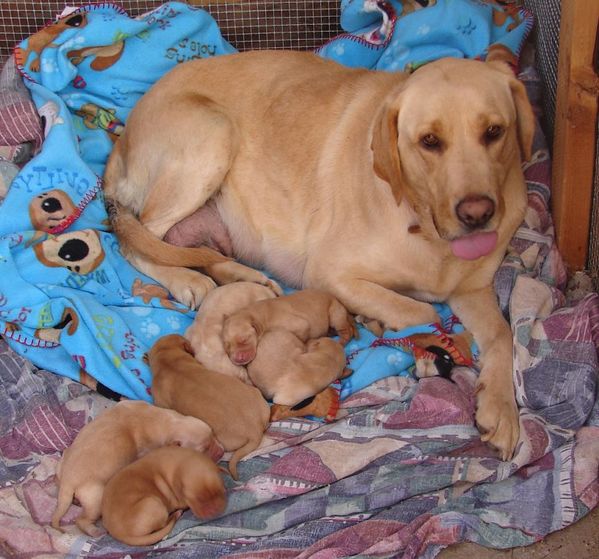
| Not everybody in Erath County knows about the Humane Society Animal Shelter and its adoptable pets. A few of the people that do know about it have the wrong impression. They often think of it as dog pound-hell. Maybe after reading the following story of the combined efforts of many people to make happy endings happen, they will change their minds and convince more pet lovers to adopt a pet instead of purchasing one from a pet store or a breeder. It was a cold and damp morning on New Year's Eve 2007. My small wildlife rescue was empty for the winter and I was enjoying the relaxing moments before spring would present me with its orphaned critters again. That's when the phone rang and my life was about to be changed forever. On the phone was Judy Hallmark, the Erath County Humane Society's shelter manager. In the previous 8 years, I have fostered quite a number of domesticated animals for the shelter in addition to my own wildlife rescue efforts. Judy had taken me under her wing when I was new in town and encouraged me to become a licensed wildlife rehabilitator. I admire her with all my heart and will be forever grateful for the help she gave me. She is a true hero to me with whom I have the honor to work hand in hand to do what I was born to do: to bring people and animals together so they may understand, assist, and complete each other. On that particular morning of New Year’s Eve, Judy asked me to bottle-raise six newborn Yellow Labrador Retriever puppies. She told me there were eleven in the litter and that five were too weak to be saved and had to be humanely euthanized. They were found frozen half to death under some porch with the mother too far gone to care. She did not have the heart to euthanize the remaining 6 healthy looking pups, Judy said. I could hear her swallowing hard, near tears. "Too many innocent ones had to go this year before they even had a chance," she sighed.
Six weeks later, in mid February 2008, the puppies were almost weaned, the phone rang again. Judy told me about a litter of five newborn Border Collie pups that had been found in a plastic bag on Alexander Road. A caring passerby stopped, picked up the bag, and drove it to the shelter. I picked up the pups and brought them home in a laundry basket. I put the basket down to get fresh towels. Upon my return I found Honey sitting in the laundry basket with the five black and white puppies suckling peacefully. She looked at me with this glare in her eyes that only a mother has.Needless to say, Honey raised those puppies too. Honey displayed such high intelligence that I decided to keep her a while longer after all the puppies were adopted into new homes. I had her spayed and vaccinated and took her to obedience classes. It was clear to me from the beginning that Honey had a higher purpose in life than just being a pet. My plan was to take her to hospitals, nursing homes, schools, and more to make people smile while educating them about animal behavior. Honey was the perfect dog for such a job. She stayed with me for eight months. Somehow the word got out about her skills and my phone rang again. This time it was a lady named Susan Branham. She told me about her son Jacob, who suffers from spina bifida, a serious birth abnormality in which the spinal cord is malformed and lacks its usual protective skeletal and soft tissue coverings. Confined to a wheel chair, her son had been having a difficult time lately and was not very motivated to do anything, she said. A dog might change that, but it has to be the right kind of dog.
The story is not over, however, far from it. Remember the female puppy with the tan nose that stuck out? She was named Trinity and ended up being the "shelter dog", like a mascot to the shelter. She grew up amongst dogs and people, displaying the same sweet character and intelligence as her mother Honey, even though she lacked obedience and leadership. It was planned that I take Trinity in over the winter months to teach her the basics. In November 2008 Trinity turned up missing from the shelter. Previous occurrences at the shelter led us to believe that she was stolen. We immediately started with the search efforts: printed out flyers, informed the police and animal control, called the newspaper; even Crime Stoppers offered a $1000 reward for her safe return. We all were worried sick!
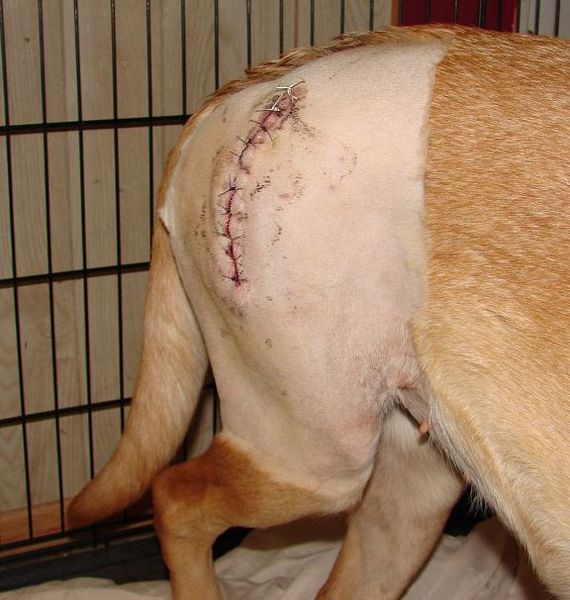
Trinity turned out to be a fast learner and she absolutely loved to do tricks. As with Honey, I pictured Trinity visiting hospitals and schools. I taught her how to stop, drop and roll and dreamed about a future with the fire department. Surely such a smart dog had a bright future and if not, I was more than happy to call her my own. As with her mother, I knew Trinity was meant to be more than just my pet. On a hunch I contacted Susan Branham to see how Honey was doing and if she wasn't by any chance interested in adopting a second dog. She replied stating that they are in the process of adopting a chocolate Lab from a Lab rescue in the Metroplex. What a shame, I thought, I asked a little too late. I continued working with Trinity and started to look for ways to permanently keep her, when she screamed out in pain one evening and started to walk on three legs. She always had a slight limp to her right hind leg, but she never showed any signs of pain, so we didn't pay much attention to it. Her condition worsened and I decided to take her to the vet for an x-ray. The diagnosis was hope-shattering: she must have sustained a severe hip injury as a puppy which was left untreated. As a result her bones had suffered severe damage. Only extensive surgery or pain medication for the rest of her life would make her life comfortable. She was only one year old. There was no doubt in my mind what had to be done. I immediately started a fundraiser and with the help of my own mother in Germany, Randi Baldwin from the TSU Wildlife Society, and many other generous contributors, we were able to raise the funds for the necessary hip surgery.
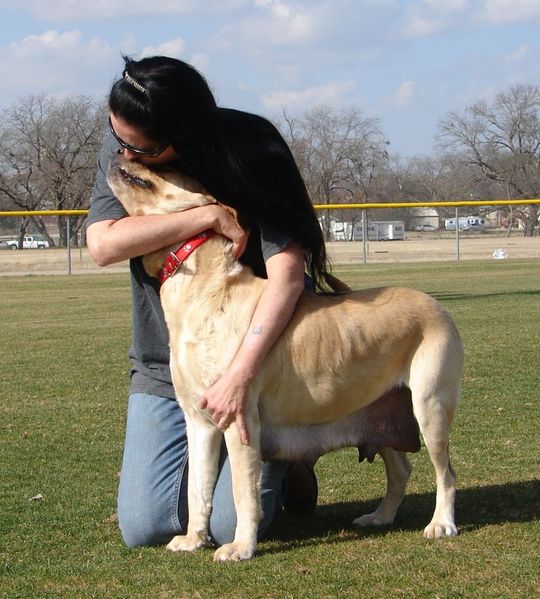
Trinity recovered nicely and was officially adopted by Susan Branham, her husband Weldon, son Jacob, and of course Trinity's mother Honey. "We are all enjoying her very much and think she is going to be absolutely as wonderful as Honey is," Susan says. “The two dogs make our lives so much richer. We laugh while they play and, honestly, I don’t know how some people live without having the love of good dogs as a part of their family like what we have here.” Animals like Trinity are taken to the shelter every day and without people to adopt them into their own loving families, many will be put down. Instead of going to a pricey breeder or a pet store to buy a puppy or kitten, please take the time to visit the Erath County Animal Shelter. If you have online access, their adoptable pets are also displayed on http://www.petfinder.com/shelters/TX1178.html . The shelter in Stephenville is open Monday through Friday from 9am until 3pm with extended hours available by appointment. Their phone number is (254) 965 – 3247. Donations for pet care items and repairs are always very welcome and extremely appreciated. |
 :
:

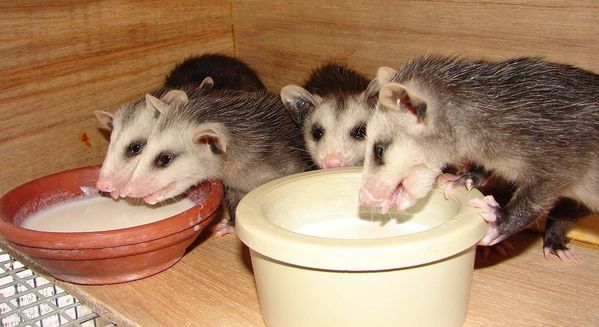 And here are the 2 older opossums:


The Rainbow Wildlife Rescue is a non-profit organization in Stephenville, Texas. My name is Birgit Sommer. I am a licensed Wildlife Rehabilitator for the State of Texas as well as a Shelter Walker and volunteer foster parent for the Erath County Humane Society. I, like many other licensed wildlife rehabilitators, work out of my own home and volunteer my time and just about every spare cent I can gather towards animal rescue efforts. No state funding is available for animal caging, veterinary care, medicine or food. That's why most rehabilitators gratefully accept donations towards the care of animals they receive from the public.
I would like to welcome our new subscribers! With 438 members we are approaching the 500 mark! Thank you all so much for taking the interest in my work with animals!
In this Issue:

If you live in Stephenville, we urge you to support and vote for Mark Murphy on May 9th. Mr. Murphy has been of great help to the animal community. He actively supports the dog park issue and if re-elected, wants to speak out for a new animal shelter.
Sean Perry has started a web site called Stephenvilledogpark.com. He also created the above graphic. Thanks! His web site features an exclusively local petition in favor of the dog park. Please click HERE to sign it!
Boy Scouts building a Flight Cage
The Boy Scouts started to build on a 16 x 8 x 8 foot flight cage according to the required State standards! It's nearly completed and the last hurdle on my way to the federal bird permit! I can't express enough gratitude towards these boys. Thank you all so very very very much!!!!
Honey and Trinity: Happy Ending
Trinity has finally made it into her forever home! The story is supposed to be printed in this Sunday's edition of the Empire Tribune, but we haven't received any confirmation as of this writing.
To the folks outside of the local newspaper area, I made the article available online for ya'll to read. CLICK HERE!
Here's an excerpt:
Honey and Trinity with Family
It was a cold and damp morning on New Year's Eve 2007. My small wildlife rescue was empty for the winter and I was enjoying the relaxing moments before spring would present me with its orphaned critters again. That's when the phone rang and my life was about to be changed forever.....
Spring Babies
If you found any of the following animals, click on the appropriate link or contact me at help@rainbowwildlife.com:
The following is an article by Angelia Joiner which she wrote for the Abilene Reporter at www.reporternews.com . I had the honor to put my 2 cents in, so make sure you read the article all the way to the end or you miss all the good advice!
Leave the mothering to nature
Experts say young animals who appear to be abandoned often are in parents' care
By Angelia Joiner
Special to the Reporter-News
Tuesday, February 17, 2009Spring is just around the corner, and as the new season arrives so do the offspring of a variety of wildlife.
Kindhearted humans sometimes find -- and try to take in -- young birds, squirrels, fawns or rabbits that appear to be abandoned.
Roy Johnson, Taylor County game warden, said most of the time this is not the case.
"Mother Nature has a way of taking care if itself," Johnson said. "If you see a fawn, I promise you the mama has not abandoned it. She will come back and take care of it."
He said the same is true for other animals.
Johnson said the exception is when someone sees a dead mother. The fawn will not leave it, and in that case, the fawn should be taken to a licensed rehabilitator -- but those are hard to find.
Erath County Humane Society Animal Shelter
I want to mention the ECHS, since they have a current Adoption List on petfinder.com. I go to the shelter at least once a week and take pictures to update the petfinder page. It has been a great success!
Don't Buy, Adopt a Pet!
Currently residing at the Rainbow Wildlife Rescue
A Kitten named Martini
Last Word of Advice: Dog Tips
Is this Dog aggressive? Know what to do!
If a strange dog approaches you, should you run or should you stay calm?
Rule number 1: always stay calm!
Emotions such as fear are considered a weakness in the animal world and will make you vulnerable.
Here are some guidelines of what you need to do to stay save when a strange dog approaches you:
1. Do not take it personally; the dog is only protecting his own space and not out to get yours.
2. Stay calm. Dogs communicate with energy. Fear and anxiety is energy. If the dog is aggressive, he wants you to get scared which spells vulnerability in the dog world. Any emotion does. So stay calm and controlled and the dog will be thrown off.
3. Stand your ground, don't run. If you have a purse, an umbrella, a stick, or something similar, place it in front of you to make yourself appear larger. Body language is another form of communication that the dog understands and he will see that you are no threat to his space, because you are claiming your own. By staying calm and claiming your space you are building an invisible energy boundary between you and the dog. You let him know that you are not afraid.
4. Wait until the dog retreats or simply looks away or turns his back on you. Then calmly walk away.
Miss Dolittle's Websites:
Critter Blog with regular Updates - Kittenbaby.com - Puppy Education - Funny Animal E-Cards - Squirrel Rescue Texas - Rainbow Wildlife Rescue in Texas - Pets and Wildlife Forum - Magic Postcards - MissDolittle on Youtube - Stephenville Dog Park - Webdesign in Support of the Rescue
Several major bird populations have plummeted over the past four decades across the United States as development transformed the nation's landscape, according to a comprehensive survey released today by the Interior Department and outside experts, but conservation efforts have managed to stave off potential extinctions of others.
"The State of the Birds" report, a sweeping analysis of data compiled through scientific and citizen surveys over the past 40 years, shows that some species have made significant gains even as others have suffered. Hunted waterfowl and iconic species such as the bald eagle have expanded in number, the report found, as birds along the nation's coasts and in its arid areas and grasslands have declined sharply.
"Just as they were when Rachel Carson published Silent Spring nearly 50 years ago, birds today are a bellwether of the health of land, water and ecosystems," Interior Secretary Ken Salazar said in a statement. "From shorebirds in New England to warblers in Michigan to songbirds in Hawaii, we are seeing disturbing downward population trends that should set off environmental alarm bells."
The fact that concerted conservation efforts have saved birds such as the peregrine falcon and allowed various wetland birds to flourish, scientists said, shows that other species can reverse their declines with sufficient support from federal agencies and private groups.
"When we try, we can do it," said John Fitzpatrick, executive director of the Cornell Laboratory of Ornithology. "There are now populations and habitats across the country begging for us to do it."
The species in decline are being affected by climate change, habitat destruction, invasive species and disease, among other factors, the report found. More pedestrian threats, such as collisions with buildings and attacks by feral cats, have diminished birds' numbers in some urban and suburban areas.
Hawaii, more than any other place in the country, highlights the challenge native American birds face. Seventy-one bird species have disappeared since humans populated the Hawaiian islands in 300 A.D., and another 10 have not been spotted in years. At the moment, more than a third of the bird species listed under the Endangered Species Act are in Hawaii, but state and federal agencies spent only $30.6 million on endangered birds there between 1996 and 2004, compared with more than $722 million on the mainland.
"In Hawaii we've got lots of imminent extinctions, but not enough resources being spent on them," said George Wallace, vice president of the American Bird Conservancy.
With sufficient funds, Wallace argued, federal managers could restore Hawaiian birds' habitat and protect them against introduced species such as pigs, sheep and deer that threaten their survival. He estimated it would cost roughly $15 million to erect extensive fencing for the Palila, a Hawaiian honeycreeper whose numbers declined from 6,600 birds in 2003 to 2,200 in 2008.
Bird advocates have enjoyed more success in raising money to protect North American waterfowl, which have a powerful political constituency among sport hunters. The U.S. government has raised $700 million for wetlands conservation through the sale of Federal Migratory Bird Hunting and Conservation Stamps, better known as "duck stamps," and a coalition of private groups and agencies in Canada, the United States and Mexico have raised more than $3 billion over the past 20 years to protect more than 13 million acres of waterfowl habitat. Taken as a whole, the 39 species of hunted waterfowl that federal managers track have increased 100 percent over the past 40 years.
In some cases, however, public and private protections for key bird species are in jeopardy. The Conservation Reserve Program provides federal dollars to farmers in order to preserve vital habitat on which species such as the lesser prairie chicken depend, but contracts encompassing 3.9 million acres are set to expire by the end of September. Michael J. Bean, who directs the wildlife program for the Environmental Defense Fund, an advocacy group, said losing these grasslands "could be the tipping point that makes an endangered species designation for the lesser prairie chicken unavoidable."
Placing the bird on the endangered species list, Bean added, could make it more difficult for entrepreneurs to build wind projects in the southern Plains. As a whole, birds that breed only in grasslands have declined by 40 percent over the past four decades.
Elsewhere in the country, conservationists are trying to protect rare bird species before disease can strike. On Santa Cruz Island, off California's southern coast, part of the Channel Island chain, Nature Conservancy officials are conducting a vaccination campaign aimed at protecting the Island Scrub-Jay from the West Nile virus, which has already hurt some related bird species on the mainland.
Scott Morrison, the conservancy's director of conservation science in California, said his group has determined the virus has yet to infect the island's unique, bright blue birds even as incidence of West Nile among birds in nearby Ventura County nearly doubled between 2007 and 2008. While the scrub-jay's remote location offers them some protection, vaccination offers even more.
"There's evidence, anecdotal, this [vaccination] could actually be a useful strategy to guard against this disease," Morrison said, noting that scientists had already vaccinated California condors against the virus. "If it comes over tomorrow, maybe we would avoid some of these scary drops in numbers, for at least a subset in population."
Source: http://www.washingtonpost.com/wp-dyn/content/article/2009/03/19/AR2009031902055.html