
| First Things to Do |  | |
Always, always isolate a rescued cat or kitten from your pets for at least fourteen days and until it has been examined by your veterinarian and tested for lethal disease; even a tiny kitten can pack a killer virus or parasite. Make the kitten comfortable in a room that is frequently visited by you and that is separate from your other pets, and wash your hands with an antibacterial soap between visits to the new animal and your household. Consult with your veterinarian so that you are able to weigh the risks against the many blessings of taking in an orphan kitten. Determine the Kitten's Condition If the kitten is lethargic or cool to the touch, you may have a life-threatening emergency (such as exposure or distemper). Get the kittenon a heating pad or other primary heat source (see item 2) and get it to a veterinarian right away or consult an emergency veterinaryclinic.
 Only Natural Pet Store Do NOT feed a chilled newborn -- you will kill it. Instead, administer slightly warmed Pedialyte (an infant rehydrating fluid, available in any grocery or pharmacy), using an animal nurser, syringe, or dropper. (You can greatly extend the life of the Pedialyte by freezing it as ice cubes, bagging the cubes and storing them in your freezer, by the way.) Feed the kitten only when it is warmed and indicates it is hungry. If the kitten seems over-warm and/or is breathing rapidly, it may be feverish or suffering from heat exhaustion or worse. Contact your vet or an emergency veterinary clinic immediately for advice if you can. To help lower the kitten's body temperature, try wiping it down with a cool, damp cloth; then administer Pedialyte. Get the kitten to a veterinarian as soon as possible. Warm the kitten A newborn kitten is not capable of generating or maintaining body warmth and must depend on its mother (and now you) to sustain warmth and life. Keeping a newborn orphan warm (even on a warm day) is a priority, more important initially than feeding (do NOT feed a chilled kitten, by the way -- you will kill it). Bundling up the kitten will do no good; it has no body heat of its own to retain. And putting the kitten near a space heater or other heating element is neither sufficient for the long-term nor safe. Wrap a heating pad, set on low, in a towel or flannel and place it in or beneath the nesting box, leaving room for the kitten to crawl off the heated area as needed. (Emergency, short-term measures: If you don't have a heating pad, put the kitten on a wrapped hot water bottle or snugged against a tightly sealed and well stabilized jar of warm water. Better yet, put the kitten next to your body -- next to the skin if possible.) Then go out and borrow or buy that heating pad after the first feeding or take the kitten to the vet immediately if its condition is poor or questionable.) Empty the Bladder Newborns cannot evacuate their bowel or bladder unassisted. The kitten you have found may be in excruciating pain or in danger of going toxic from having to retain its own body waste. You should help the kitten at least empty its bladder before proceeding with warming or feeding or even the trip to the veterinarian. With the kitten on a towel in your lap, lightly rub the kitten's body with a rough, dry washcloth. (At that point, the kitten may roll over or otherwise present its bottom to you.) With a generous handful of soft tissue (also to be kept handy at all times) gently stroke the kitten's behind, keeping the tissue in contact. The kitten should oblige by urinating a rather amazing amount. Simply rotate the tissue until kitten stops urinating or the tissue is soaked, whichever comes first. Another method to stimulate evacuation is to use a tissue or wash cloth moistened with warm water instead of a dry cloth or to apply a moistened Q-tip (hold the kitten over a sink or a folded towel if you use the latter method). The Formula (more about Formula and feeding HERE) Never feed a kitten cow's milk or human baby formula as this causes stomach upset and severe diarrhea. If a kitten is already dehydreated, this could prove fatal. This includes condensed/evaporated canned cow's milk! There are several good milk replacers on the market, available in liquid or powder form (my personal favorite is called Just Born). The ready-mix liquid is more convenient. Be sure the product is engineered for kittens and that it is fresh (some have a short shelf-life). Milk replacers can be found in any pet supplies store, most veterinary clinics, and even in some variety stores. If the kitten seems weak or ill and you cannot get to a veterinarian right away, you should administer slightly warmed Pedialyte before offering the milk replacer. | ||
Oct 10, 2005
First Things to Do with a New Kitten


Oct 8, 2005
Bottle-feeding your Kitten
| Bottle-feeding your Kitten | | ||||
What You Need:
1. Prepare your supplies. Sterilize the kitten-sized baby bottles and nipples in a boiling water bath for about 5 minutes. Cool before using. Place a large towel, a rough-textured washcloth and a bowl of warm water on a table next to a comfortable chair. 2. Fill bottle with desired amount of commercial kitten milk replacement such as KMR and a pinch of plain yoghurt (for every feeding) which will help the kitty's digestion. There are several good milk replacers on the market, available in liquid or powder form. The ready-mix liquid is more convenient. Be sure the product is engineered for kittens and that it is fresh (some have a short shelf-life). Milk replacers can be found in any pet supplies store, most veterinary clinics, and even in some variety stores. DO NOT USE COW MILK! Never feed a kitten cow's milk or human baby formula as this causes stomach upset and severe diarrhea. If a kitten is already dehydreated, this could prove fatal. This includes condensed/evaporated canned cow's milk!
 Entirely Pets If the kitten seems weak, dehydrated or ill and you cannot get to a veterinarian right away, you should administer slightly warmed Pedialyte before offering the milk replacer. Warm the formula by placing the bottle in a bowl of very hot water, then test it against your forearm. It should be 95° to 100° fahrenheit, or approximately body temperature. Test the nipple to ensure the flow is just right. 3. Sit in the chair with the towel folded in your lap. Place the kitten prone (face down) on your lap. Make sure the kitten is warm before feeding. Feeding formula to a cold kitten can cause serious digestive problems. Without raising the kitten's head, place the kitten's head gently on your palm and guide the nipple into his mouth. He should start nursing right away. If all goes well, let him continue nursing until finished. Do not overfeed. 4. If the kitten does not start nursing right away, or if he seems to have trouble getting the milk, check the nipple again. It should not drip milk when held upside down, but should drip given a small amount of pressure. It may also be helpful to stroke his head or gently pet his back to start his nursing reflexes, but once he gets the idea, he will nurse readily. 5. Much like human babies, kittens may need "burping" after nursing. This is best accomplished by holding one hand under his abdomen and gently patting his upper back. Not too hard - you don't want him to vomit. If he doesn't burp right away, go to step #6. 6. The mother cat will stimulate her kitten's elimination by licking his anus and genital area with her rough tongue. You can emulate this process with a warm, damp, rough washcloth or dampened paper towel. It may take a couple of feedings to see results, so don't despair if he doesn't defecate right away. Urinating may take a bit longer. 7. Your kitten will want to sleep after nursing, so put him back into his bed to let him sleep undisturbed. 8. Your newborn kitten will need approximately 32 cc (1.1 oz.) of formula a day, divided into 9 - 12 feedings a day, depending on his size and condition. Count on feeding him every two hours or so, around the clock, for starters. Yes, it's a demanding job, but intensely rewarding to watch your newborn develop and grow.
 Entirely Pets Tips: 1. In a pinch, if you can't get kitten baby bottles, an eye dropper will do. Be very careful to drop only a very small amount on the kitten's tongue to avoid aspiration of the formula into his lungs. | |||||
|
 Petco  | |||||


Oct 4, 2005


Sep 29, 2005
R.I.P. Ollie
Sep 27, 2005
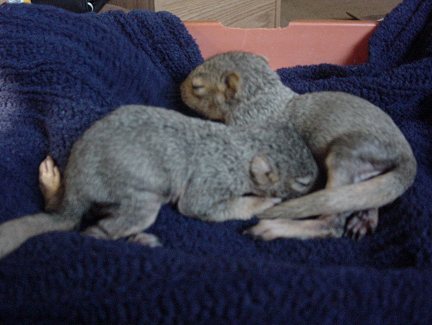
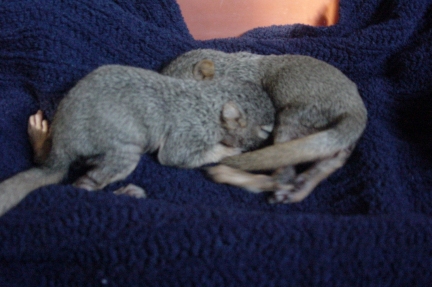
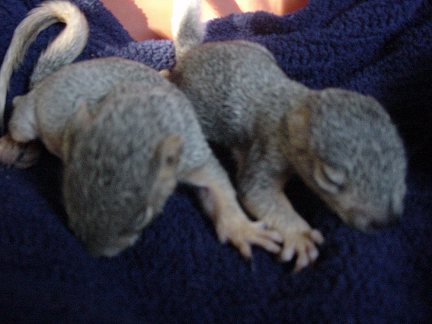
More Squirrel Orphans
One of the girls seems to have problems with her hind legs, possible nerve damage.
The other 2 squirrels are progressing marvelously!
Sep 20, 2005
Baby Squirrel Update


Sep 16, 2005
Squirrel Orphans, Ollie the Opossum, and Kittens!
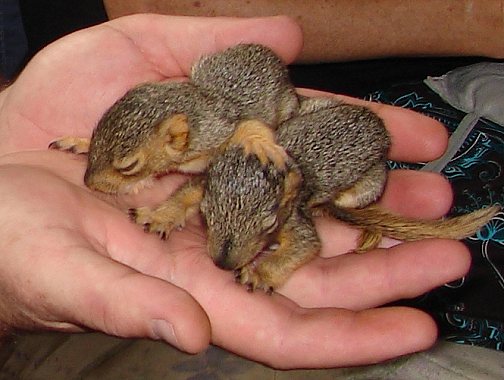
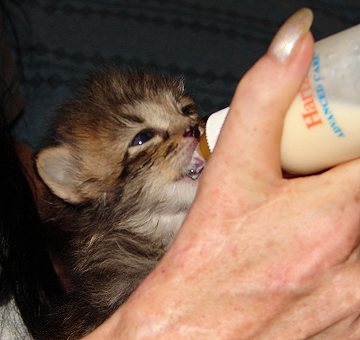
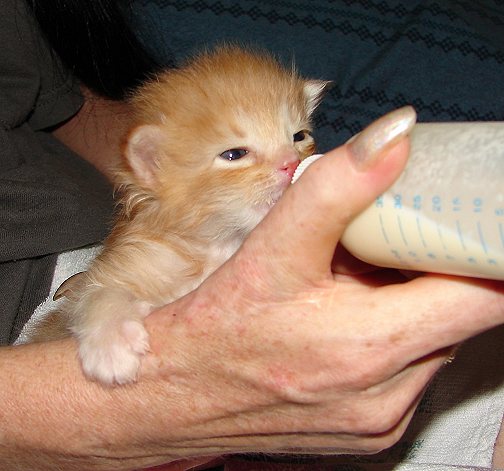
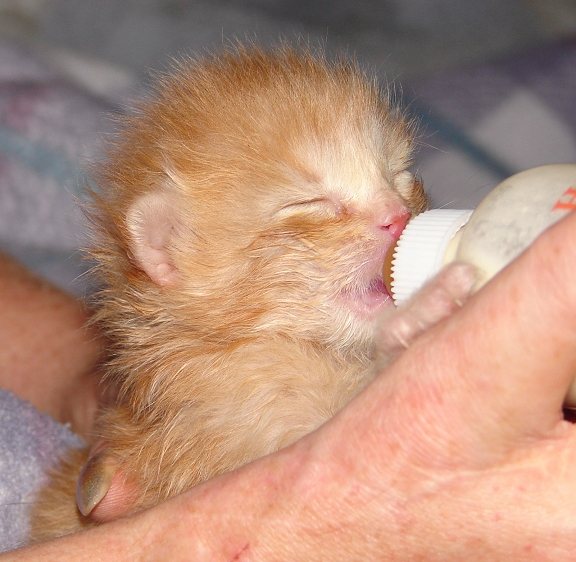
4 kittens were brought to me by animal control. They were found on a decaying mother and I did not expect them to be this healthy. Their eyes were still closed when I got them and today they are 4 weeks old and already use the litterbox!



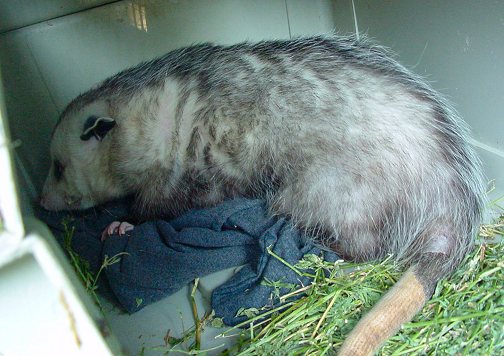
Ollie, the crippled Opossum is full grown now and doing great:

Sep 1, 2005
Ollie, the crippled Opossum
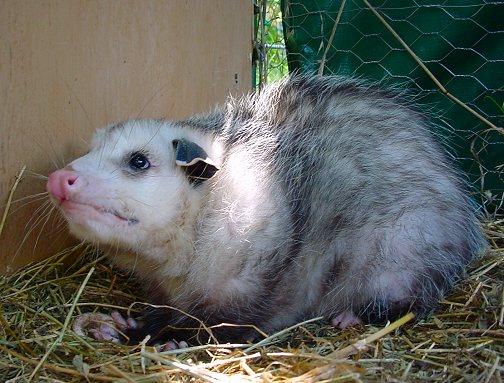
Ollie likes it in his outside enclosure. He is now seven months old.
More about Ollie is in the Archives of this Blog.


