
Cats can produce a purring noise that typically indicates that the cat is happy. Less typically it can also can mean that it feels distress. Cats purr among other cats—for example, when a mother meets her kittens.
There were many competing theories to explain how cats purr, including vibration of the cat's false vocal cords when inhaling and exhaling, the sound of blood hitting the aorta, vibration of the hyoid apparatus, or resonation directly in the lungs. But currently, it is believed that purring is a result of rhythmic impulses to the cat's larynx.
Purring may also be a way for the cat to calm itself down. For example, some cats have been known to purr when hurt. Though not proven, research has suggested that the frequency of the vibration produced by purring may promote healing of bones and organs in cats, explaining why cats may purr when hurt.
Jan 24, 2007


General Cat Care
What you’ll need to know to keep your companion feline happy and healthy.
Background
Cats were domesticated sometime between 4,000 and 8,000 years ago, in Africa and the Middle East. Small wild cats started hanging out where humans stored their grain. When humans saw cats up close and personal, they began to admire felines for their beauty and grace.
There are many different breeds of cats--from the hairless Sphynx and the fluffy Persian to the silvery spotted Egyptian mau. But the most popular felines of all are non-pedigree—that includes brown tabbies, black-and-orange tortoiseshells, all-black cats with long hair, striped cats with white socks and everything in between.
Cost
When you first get your cat, you’ll need to spend about $25 for a litter box, $10 for a collar, and $30 for a carrier. Food runs about $170 a year, plus $50 annually for toys and treats, $175 annually for litter and an average of $150 for veterinary care every year. The best place to get a cat? Your local shelter! Please visit our shelter directory to find shelters and rescue groups in your area.
Note: Make sure you have all your supplies (see our checklist) before you bring your new pet home.
Basic Care
Feeding
- An adult cat should be fed one large or two or three smaller meals each day.
- Kittens from 6 to 12 weeks must eat four times a day.
- Kittens from three to six months need to be fed three times a day.
You can either feed specific meals, throwing away any leftover canned food after 30 minutes, or keep dry food available at all times. We recommend a high-quality, brand-name kitten or cat food; avoid generic brands. You will need to provide fresh, clean water at all times, and wash and refill water bowls daily.
Although cat owners of old were told to give their pets a saucer of milk, cats do not easily digest cow’s milk, which can cause diarrhea in kittens and cats. Treats are yummy for cats, but don't go overboard. Most packaged treats contain lots of sugar and fat, which can pack on the pounds. Some cats like fresh fruits and vegetables, like broccoli, corn or cantaloupe. You can offer these once in awhile.
If your kitten is refusing food or isn’t eating enough, try soaking her kitten food in warm water. If that doesn’t work, kittens can be fed human baby food for a short time. Use turkey or chicken baby food made for children six months and older. Gradually mix with her regular food.
Grooming
Most cats stay relatively clean and rarely need a bath, but you should brush or comb your cat regularly. Frequent brushing helps keep your cat's coat clean, reduces the amount of shedding and cuts down on the incidence of hairballs.
Handling
To pick up your cat, place one hand behind the front legs and another under the hindquarters. Lift gently. Never pick up a cat by the scruff of the neck or by the front legs.
Housing
Your pet should have her own clean, dry place in your home to sleep and rest. Line your cat's bed with a soft, warm blanket or towel. Be sure to wash the bedding often. Please keep your cat indoors. Cats who are allowed outdoors can contract diseases, get ticks or parasites, become lost or get hit by a car, or get into fights with other free-roaming cats and dogs. Also, cats may prey on native wildlife.
Identification
If allowed outdoors (again, we caution against it!), your cat must wear a safety collar and an ID tag. A safety collar with an elastic panel will allow your cat to break loose if the collar gets caught on something. And if your pet is indoors-only, an ID tag or an implanted microchip can help insure that your cat is returned if he or she becomes lost.
Litter Box
All indoor cats need a litter box, which should be placed in a quiet, accessible location. A bathroom or utility room is a good place for your cat's box. In a multi-level home, one box per floor is recommended. Avoid moving the box unless absolutely necessary. Then do so slowly, a few inches a day.
Keep in mind that cats won't use a messy, smelly litter box, so scoop solid wastes out of the box at least once a day. Dump everything, wash with a mild detergent and refill at least once a week; you can do this less frequently if using clumping litter. Don't use ammonia, deodorants or scents, especially lemon, when cleaning the litter box.
Behavior Information
Play
Cats delight in stalking imaginary prey. The best toys are those that can be made to jump and dance around and look alive. Your cat can safely act out her role as a predator by pouncing on toys instead of people's ankles. Please don't use your hands or fingers as play objects with kittens. This type of rough play may cause biting and scratching behaviors to develop as your kitten matures.
Scratching
Cats need to scratch! When a cat scratches, the old outer nail sheath is pulled off and the sharp, smooth claws underneath are exposed. Cutting your cat’s nails every two to three weeks will keep them relatively blunt and less likely to harm the arms of both humans and furniture.
Provide your cat with a sturdy scratching post, at least three feet high, which will allow her to stretch completely when scratching. The post should also be stable enough that it won't wobble during use, and should be covered with rough material such as sisal, burlap or tree bark. Many cats also like scratching pads. A sprinkle of catnip once or twice a month will keep your cat interested in her post or pad.
Health
Your cat should see the veterinarian at least once a year for an examination and annual shots, and immediately if she is sick or injured.
Ear Mites
These tiny parasites are a common problem that can be transmitted from cat to cat. If your cat is constantly scratching at his ears or shaking his head, he may be infested with ear mites. You will need to call your vet, as your cat's ears will need to be thoroughly cleaned before medication is dispensed.
Feline Urological Syndrome (FUS)
Both males and females can develop this lower urinary inflammation, also called Feline Lower Urinary Tract Disease (FLUTD). Signs of FUS include frequent trips to the litter box, blood in the urine and crying out or straining when urinating. If your male cat looks "constipated," he may have a urethral obstruction and can’t urinate. This can be fatal if not treated quickly. Urethral blockages are rare in females. About five percent of cats are affected with FUS. Special diets may help prevent this condition.
Fleas and Ticks
Flea infestation should be taken seriously. These tiny parasites feed off of your pet, transmit tapeworms and irritate the skin. Carefully check your cat once a week for fleas and ticks. If there are fleas on your cat, there will be fleas in your house. You may need to use flea bombs or premise-control sprays, and be sure to treat all animals in your house. Take care that any sprays, powders or shampoos you use are safe for cats, and that all products are compatible when used together. Cats die every year from improper treatment with flea and tick control products. Please contact your veterinarian for the most effective flea control program for your pet.
Medicines and Poisons
Never give your cat medication that has not been prescribed by a veterinarian. For example, did you know that acetominophin and aspirin can be FATAL to a cat?! Keep rat poison or other rodenticides away from your cat. If you suspect that your animal has ingested a poisonous substance, call your veterinarian or the ASPCA Animal Poison Control Center for 24-hour animal poison information at (888) 426- 4435.
Spaying and Neutering
Female cats should be spayed and male cats neutered by six months of age. Neutering a male (removing the testicles) can prevent urine spraying, decrease the urge to escape outside and look for a mate, and reduce fighting between males. Spaying a female (removing the ovaries and uterus) helps prevent breast cancer, which is usually fatal, and pyometra (uterus infection), a very serious problem in older females that must be treated with surgery and intensive medical care. Since cats can breed up to three times per year, it is vital that your female feline be spayed to prevent her from having unwanted litters.
Vaccinations
* Kittens should be vaccinated with a combination vaccine (called a “3 in 1”) at 2, 3 and 4 months of age, and then annually. This vaccine protects cats from panleukopenia (also called feline distemper), calicivirus and rhinotracheitis. If you have an unvaccinated cat older than four months of age, he will need a series of two vaccinations given 2 to 3 weeks apart, followed by yearly vaccinations.
* There is a vaccine available for feline leukemia virus (FeLV). This is one of the two immune system viruses (retroviruses) that infect cats. The other is feline immunodeficiency virus (FIV). There is no vaccine available for FIV. Cats can be infected with either virus for months, even years, without any indication that they are carrying a fatal virus. All cats should be tested for these viruses.
FeLV and FIV can be transmitted at birth from the mother or through the bite of an infected cat. Neither virus can infect humans. Many outdoor and stray cats and kittens carry this infection. Because of the fatal nature of these diseases, you should not expose cats already living in your home by taking in untested cats or kittens. To be safe, keep your cat indoors—but if your cat does go outside, he should be vaccinated against the feline leukemia virus. Remember, no vaccine is 100-percent effective.
Please note, if your companion cat gets sick because he is not properly vaccinated, the vaccinations should be given after your pet has recovered.
Worms
Kittens and cats can be infected with several types of worms. The key to treatment is correct diagnosis. This will ensure that the medication is effective against the parasite your pet has. A dewormer that eliminates roundworms, for example, will not kill tapeworms. Your veterinarian can best determine the culprit—and prescribe the appropriate medication.
Cat Supply Checklist
- Premium-brand cat food
- Food dish
- Water bowl
- Interactive toys
- Brush
- Comb
- Safety cat collar with ID tag
- Scratching post or scratching pad
- Litter box
- Litter
- Cat carrier
- Cat bed or box with warm blanket or towel
Jan 23, 2007
The ASPCA Speaks Out Against Bonsai Kitten Website
This summary is not available. Please
click here to view the post.
Jan 22, 2007
Kittenbaby.com FREE Wallpapers!
Kittenbaby.com Wallpapers etc.
|

251 images in 23 categories.
| |||||||||
|


Top 10 Tips About What — and How — to Feed Your Puppy or Kitten
Newborn kittens and puppies receive complete nutrition from their mothers’ milk for the first four weeks of life. As they gradually begin to eat on their own, they will be fully weaned after a few more weeks. During the first weeks of life, body weight may double or triple, and this rapid growth will continue—although at a gradually decreasing rate—until maturity. Large amounts of energy and nutrients are required in balanced quantities to support this spectacular growth.
Here are our top ten tips for feeding puppies and kittens:
1. Kittens are best fed mom's milk; it's 100-percent perfect for their needs. However, if the mother is ill or doesn’t produce enough milk, or if the kittens are found as orphans, it is necessary to feed them a commercial milk replacer.
2. Generally, orphaned or hand-fed kittens can be offered moistened kitten food at about three weeks of age. Use a commercial milk replacer to moisten the food, and gradually reduce the amount of milk replacer you use, until the kittens are eating dry kitten food at about five or six weeks of age.
3. At first, curious kittens will probably want to play with their food rather than eat it, but the youngsters will soon catch on as they watch mom eat. By the time kittens are five to six weeks old, they should be nibbling on dry food consistently. This process of gradually introducing kitten food is important in training the cats to eat when they are weaned.
4. After weaning, kittens can be fed free-choice—dry or nutrient-dense kitten-formula canned food. Make sure fresh water is available at all times.
5. Most queens will suckle their kittens until about eight weeks of age. By this time, 80- to 90-percent of the kitten's total nutrient intake should be from kitten food. Kittens need large amounts of energy—about two to three times that of an adult cat. Kittens also need about 30 percent of their total energy from protein. Make sure the food you offer is specifically formulated for kittens; your pet will need to eat kitten-formula food until she reaches maturity, at about one year.
6. Canines generally begin eating puppy food at about three or four weeks, and are completely weaned by seven or eight weeks. They require up to twice the energy intake of adults and, depending on the breed, will need to have 25- to 30-percent protein.
7. As with kittens, puppies should have puppy food available prior to weaning. These meals should begin when the pups are three to four weeks old; start with small quantities. Puppies often play in their food when it is first introduced, but they will quickly learn what to do with it! By the time the pups are ready to wean at six to eight weeks old, they should be eating their dry food consistently.
8. Small breeds of dogs reach mature body weight in nine to twelve months, while giant breeds may not be mature until they reach their second birthday.
9. Just who are we calling SMALL? Small-breed dogs are 20 pounds or less. As pups, they can often be fed free-choice. When food is readily available, most small-breed dogs will develop good eating habits and not become overweight. If you have other pets, you should probably feed your small-breed dog by the portion control method.
10. Most medium-breed puppies (adult size between 20 and 50 pounds) and all large or giant breed pups (more than 50 pounds as adults) are best fed with the portion control method.
BONUS! Special Concerns about Feeding Large- and Giant-Breed Puppies
If puppies are allowed to overeat, they may consume too many calories and too much calcium, grow too rapidly and develop bone growth problems. In breeds that are prone to these diseases, such as many large and giant breeds, overfeeding can lead to an increased frequency of hypertrophic osteodystrophy (HOD), osteochondrosis (OCD) and hip dysplasia.
Clinical signs often seen with bone growth disease include bowing of the front legs. Sometimes, these signs are misdiagnosed as calcium deficiency (also known as rickets). Radiographs are crucial for an accurate diagnosis. Adding more calcium to the diets of dogs with HOD, OCD or hip dysplasia will actually worsen the condition—and may result in permanent damage.
It is important to aim for a slower rate of growth with large and giant breed puppies. Do not overfeed, or try to push the growth rate too fast. Controlled feeding of a balanced diet specifically made for large- and giant-breed puppies facilitates optimal skeletal development. Remember, the adult size of a dog is determined genetically—not by how fast the animal grows.
Oct 20, 2006
Newborn Squirrel
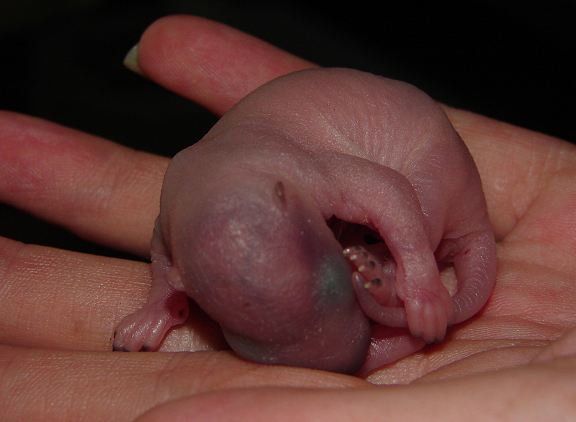
Urgenty needed!
Esbilac Powder
Rainbow Wildife Rescue
502 E. Clifton
Stephenville, TX 76401
What to do first:
Try to reunite the baby or babies with their mom. If you think the mother squirrel may still be in the area and you have a good idea where the nest is that the babies came from, you can give the mother the opportunity to retrieve the babies.
If a baby is sick, injured or cold the chances are that the mom will not come back to retrieve it.
If the babies are warm and healthy and there is a good chance that the mother may still be in the area, we recommend giving her about 2 hours to come back for the babies. If she has not come for them within the 2-hour time frame, then she probably won’t come for them.
Place the babies in a box. You can place this box near the tree or area they came from. Make sure that the babies can’t get out of the box but the mother will be able to get in and get the babies.
If the babies still have their eyes closed, they will need a heat source to help them keep warm. Even on hot summer days baby squirrels can get chilled quickly.
A soda bottle filled with hot water and covered with a sock can be placed near the babies. Test to be sure the temperature isn’t too hot, and place a tee-shirt around it to be sure it doesn’t roll onto the babies.
Supervise the reunion attempt carefully but from a distance. Make sure the babies are safe from natural predators such as cats, dogs, hawks, crows, and snakes. But you must also remain out of mom's sight, so that she feels safe coming for the babies.
If the babies are found just before dark, DO NOT place them out for mom. She won’t be moving after dark. You can put them out in place as soon as the sun is up in the morning. If she is in the area she will start looking for them then.
Baby Kittens
|
|
|
|
| |||||
|
|
|







in the past 2 months.
Make sure you join our Pet and Wildlife Forum to talk about your kittens or ask any questions
you might have about raising baby kittens or any other pet or wildlife!
Jun 6, 2006
Subscribe to:
Posts (Atom)
