Feb 5, 2007

Baby Squirrel Clara's 7th day at the Rainbow Wildlife Rescue

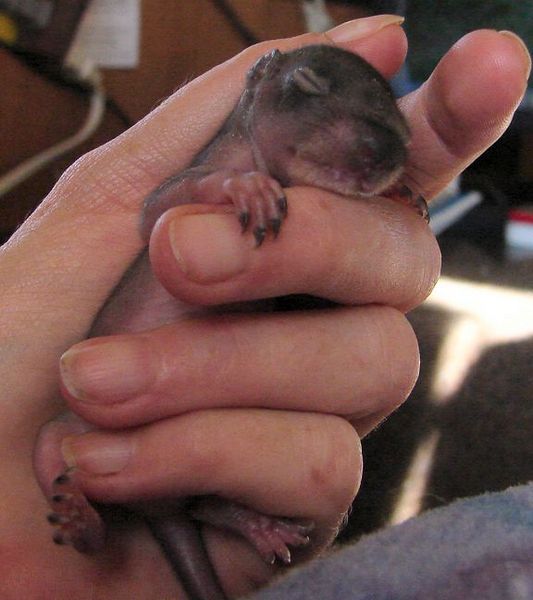


Baby Squirrel Clara's 7th day at the Rainbow Wildlife Rescue

Feb 4, 2007

Squirrel Clara's 6th day at the Rainbow Wildlife Rescue

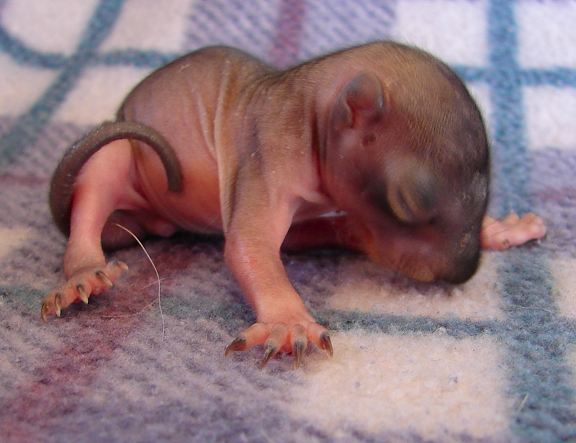
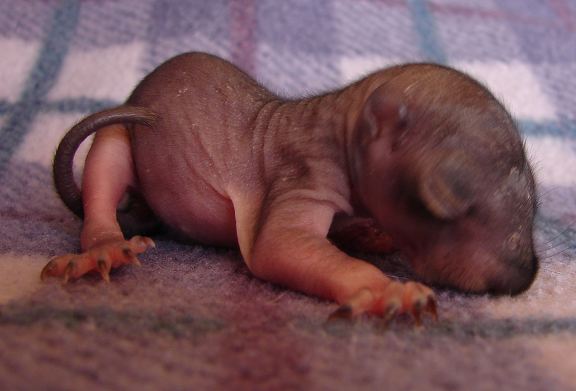
Clara's 6th day went as great as the days before. She gains weight, eats exactly the amount she
should, the fur is coming in now and her digestion is picture book perfect. I could not ask for more!!

Click to view full size image


Click to view full size image

Feb 2, 2007

Kittens and Cats

Litter-box Training your Kitten

Cats don’t need to be trained to use a litter box - they just do it.

By understanding why they prefer to eliminate in a litter box will help their human owners not to make any mistakes in having and maintaining the “cat box”. It is a cat’s basic instinct (even big cats) to eliminate away from their food and sleeping area and to bury the waste in order to hide their position from other animals and protect their nests and young.Kitten

Most kittens start using the litter-box at the age of 3-4 weeks on their own. At this young age you can show the kitten where to go and it might happen a bit faster:

Immediately after feeding your kitten, pick her up and gently place her in the litterbox. Scratch the litter a little with your fingers so she can get the idea. If she goes, praise her profusely. If she doesn’t, watch her closely for indications of wanting to go elsewhere. The instant you see her squatting, pick her up and gently place her in the litter-box.

Never throw her in or scold her–it will only associate the box with unpleasant memories in her mind. Every time she uses the box, praise her profusely. You want her to associate her box usage with pleasure.

Keep the box immaculately clean, by scooping it several times a day and changing the litter and washing and disinfecting the box at least twice weekly.

Here are a few things to consider about the litter box:

  • Don’t place a litter box close to food or water.
  • Some cats do not like covered litter boxes. Not only does the odor tend to stay within the box if it is not kept scrupulously clean but large cats are often not able to achieve a comfortable position for elimination.
  • Being meticulous creatures, cats are reluctant to stand on/in half wet or soaking wet litter. If you are unable to clean the box often enough consider getting another box.
  • The litter box should only have about a half inch of inch of litter and it should be changed frequently. Cats and especially kittens do not like sinking into a soggy mound of smelly litter. Putting a small amount of litter into the pan saves litter and also means it is easier for you to change.
  • Don’t line the bottom of the litter pan with newspaper or use plastic liners. Newspaper smells and those plastic liners form wrinkles for urine and feces to hide. The plastic liners also tear easily.
  • If your cat soils a hard surface, it might be a sign that he prefers that type of surface. You might try putting litter on only half the bottom of the litter pan. You should never change brands of litter once you find one that is well liked.
  • Clumping litter should be avoided especially with kittens. This type of litter creates more dust, which settles on the kitten, is ingested when the kitten washes itself and then clump inside the kitten’s stomach.
  • Longhaired cats and declawed cats are especially sensitive to unclean, deep and smelly litter. A declawed cat’ paws are more sensitive to litter in general. Please read our stand on declawing.
  • Do not use harsh or odiferous sprays around the litter box. Cats frequently shy away from chemicals designed to mask odors. Masking bad odors with pleasant ones may be pleasant to you but not to your cat.
  • Lack of privacy can also cause problems. Interruption by children and sometimes other pets, such as a dog and loud household noises must be avoided. A quiet location for the litter box is a necessity.
  • Urinating outside the litter box is frequently the first sign of a bladder or kidney problem and if the problem persists the cat should be checked out by your veterinarian.

Is the Kitty Dehydrated?

Tiger kittenHydration is basically how much water we have in our system. Since water drives all of our metabolic functions, you can see why adequate hydration is essential.

The easiest way to check how hydrated your kitten is, is to grasp the skin firmly but gently between the kitten’s shoulder blades, and lift it straight up with a twisting motion as you release it. If the kitten’s skin is well hydrated it will pop back within a second or less.

The longer it takes the skin to return to its place, the more fluids your kitten needs.

Treatment: A kitten that is noticeably dehydrated should receive prompt veterinary attention. Treatment is directed at replacing fluids and preventing further losses. In mild cases without vomiting, fluids can be given by mouth. If the kitten won’t drink, give an electrolyte solution by bottle or syringe into the cheek pouch.

Balanced electrolyte solutions for treating dehydration in children are available at drugstores. They are given at the rate of two to four milliliters per pound body weight per hour, depending on the severity of the dehydration.

Feed the solution every hour until the skin snaps back accordingly. Then start with a thin milk replacer mixed with the electrolyte solution. Never give a kitten or any other mammal cow’s milk!

Adopting a Kitten

Kitten fightingWhether you adopt a pet from a local animal shelter or a rescue organization, humane society, you’re saving lives.
That’s right: lives, as in more than one. You probably want to adopt just one kitten or cat, right? Adoption saves more than just the life of the pet you adopt.
If you adopt from an animal shelter, you’re making room for another dog or cat, or you’re allowing other dogs or cats at the shelter to be kept for a longer period of time, giving them a better shot at being adopted.
Jan 31, 2007

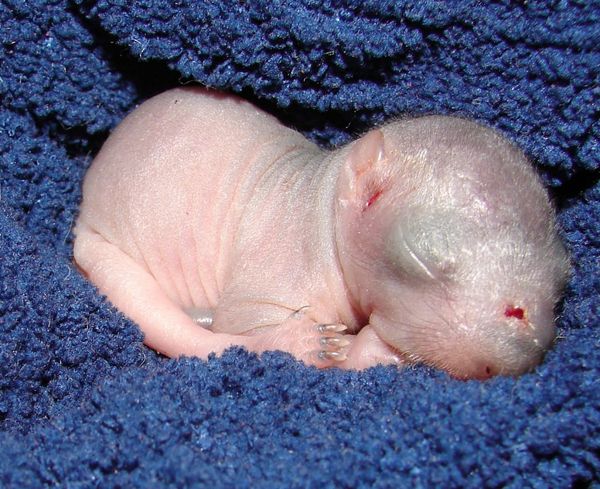
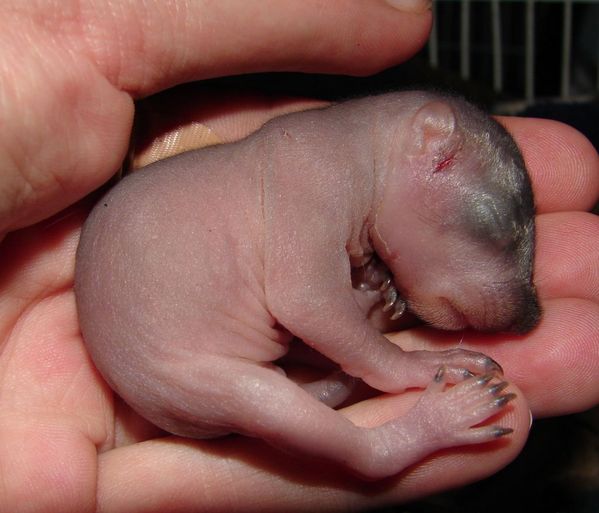
The year starts early - pink squirrel baby

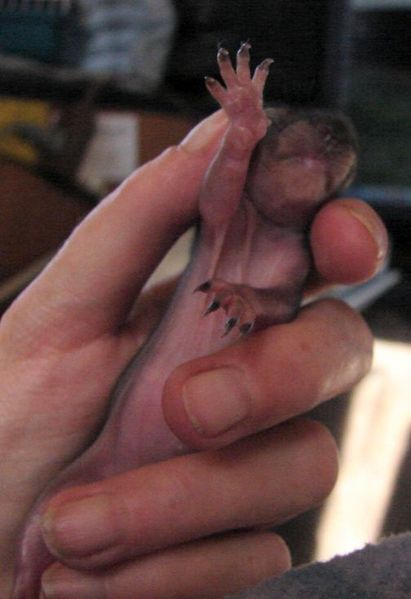
She was brought to me as an "opossum", but turned out to be a little squirrel girl. She's been here for 2 days now and I am happy with the progress. She had a puncture wound and a larcaration which are healing nicely. I put her on antibiotics just in case the wounds were caused by a cat and the bacterias had time to settle in. Lets hope she will continue to progress as she has the past 2 days :):

Click to view full size image

Click to view full size image


clara1.jpg
clara.jpg
klein-korgie1.jpgi
klein-korgie.jpg
pinkthing1.jpg
pinkthing2.jpgi
pinkthing.jpg


She weighs 0.9 oz and eats 0.5 - 1 cc every 3 hours.

Declawing and Alternatives

Declawing is something that should only be considered in cases of EXTREME behavioral problems. Cats use their claws to exercise, play, stretch, climb, hunt and mark their territory. Although your cat might use your hands or furniture for these activities, declawing is NOT the answer and there are many other ways to guide your cat to healthy claw activity.

The declawing operation itself is the human equivalent of removing the first joint of all your fingers. Many vets feel that the lack of these joints impairs the cat's balance and can cause weakness from muscular disease. Declawing also makes a cat feel defenseless and can affect their personality, making them skittish or nervous biters. In rescue work, we see many declawed cats that have been given up by their owners. Why? Because these cats still had behavioral problems that were worsened by not having their claws. So, if you are adamant about declawing your new cat, why not consider adopting a cat which has already been declawed?

Take it from an expert. Dr. Nicholas Dodman, author of The Cat Who Cried For Help, offers this perspective on the procedure:"Declawing involves more than simply trimming a cat's nails to the quick; it actually involves amputation of the tips of the digits, bones and all. The inhumanity of the procedure is clearly demonstrated by the nature of cats' recovery from anesthesia following the surgery. Unlike routine recoveries, including recovery from neutering surgeries, which are fairly peaceful, declawing surgery results in cats bouncing off the walls of the recovery cage because of excruciating pain. Cats that are more stoic huddle in the corner of the recovery cage, immobilized in a state of helplessness, presumably by the overwhelming pain. Declawing fits the dictionary definition of mutilation to a tee. Words such as deform, disfigure, disjoint, and dismember all apply to this surgery. Partial digital amputation is so horrible that it has been employed for torture of prisoners of war, and in veterinary medicine, the clinical procedure servesas a model of severe pain for testing the efficacy of analgesic drugs. Even though analgesic drugs can be used postoperatively, they rarely are, and their effects are incomplete and transient anyway, so sooner or later the pain will emerge.

‘The operative removal of the claws, as is sometimes practiced to protect furniture and curtains, is an act of abuse and should be forbidden by law in all, not just a few countries.’(highly regarded British textbook by Turner and Bateson on the biology of cat behavior) However quickly cats forget the hideous experience of declawing, and even though they may not hold grudges, that doesn't seem sufficient justification for putting a family pet through such a repugnant experience.""

There are alternatives to declawing. Exercise and play with your cat regularly. Give him a scratching post and teach him to use it. Trim your cat's nails on a regular basis. And, of course, talk to your vet or cat-owner friends about ways to "train" your cat to exercise its natural instincts in non-destructive ways. A squirt bottle is a great way to teach a cat not to scratch on particular surfaces. It doesn't hurt them and if you are persistent, they will get the message. There is also a product called Soft Paws. This is a fake nail which is not sharp at the tip, which fits over your cats claws. It is sold in pet stores and veterinarian clinics. And if you are adamant about having a kitty without claws, why not adopt a previously declawed kitty?

http://www.kittenrescue.org/declaw.htm

Jan 28, 2007

How to Tame a Feral Cat or Kitten

How to Tame a Feral Cat or Kitten

With a little patience and time, a feral (or wild) cat can be tamed into a loving pet. Younger cats are more apt to adjust quickly: 6-to-8-week-old kittens typically take two to three weeks to adjust to a domestic environment.

Instructions

* STEP 1: Enclose the cat or kitten in a small space at first - a bathroom or bed-room works best.

* STEP 2: Turn out the light if the cat is terrified; this often has a calming effect.

* STEP 3: Put a bed, a litter box, food and water in the room. If the cat is very young (6 to 12 weeks), put her in a large carrier with a grated door and small windows.

* STEP 4: Spend at least 2 to 3 hours a day with the animal. Just sitting quietly in the same room will allow the cat to learn that you are not a threat.

* STEP 5: Gently compel the cat to let you touch her. Carefully wrap a blanket around her if you have to, hold her on your lap and pet her. Stroke her coat and touch her ears, face and neck as you talk to her in soothing tones. Even if the animal doesn't seem to be enjoying the attention, she is. Hold the cat by the scruff of the neck if she attempts to leave. (The mother cat will do this to carry or train a kitten'it doesn't hurt, and it actually relaxes the animal.)

* STEP 6: Present special treats such as chicken or tuna, and leave them if the cat will not eat from your hand.

* STEP 7: Gradually allow the cat to roam about in more rooms.

* STEP 8: If the cat tries to run away from you repeatedly, enclose her in a smaller space and start again.

Tips & Warnings

* Don't get discouraged early on; young feral cats can become very affectionate pets. Younger cats are more apt to adjust quickly: 6- to 8-week-old kittens typically take two to three weeks to adjust to a domestic environment. An older cat that has been wild for a long time is difficult and sometimes impossible to tame, and may be better left outside. If you catch one, have the animal spayed or neutered and vaccinated, and then turn the cat loose where caught, or contact a professional.

* Handle feral cats with extreme caution. Use gloves and protective clothing as required. Cat bites and scratches can result in serious health problems.

Source: http://www.ehow.com/how_6548_tame-feral-cat.html

Jan 26, 2007

If you found an orphaned Opossum

If you found an orphaned Opossum:

1. Check for injuries. Seriously injured babies should be taken to a veterinarian that day.

2. Warm the baby quickly if it feels cold

  • Heating pad: Set temperature on low. Place the heating pad half under a closed box the baby has been placed inside of along with ravel-free cloths to snuggle with.
  • Disposable plastic bottle: Use a plastic soft drink bottle or other plastic bottle. Fill it with hot water. Wrap it with a towel or other cloth. Place it inside a box with the baby. Make sure that it will not roll around possibly hurting the baby.
  • Rice sock: Fill a sock 2/3 full of rice. Microwave it on high for 2 to 2 ½ minutes. Place it in the bedding in the box with the baby.

3. Treat dehydration. Give fluids by mouth using a 1 cc syringe, eye-dropper, or pet nurser. Offer the fluids at room temperature hourly for up to 6 hours. Do not exceed 12 hours. Any of the following fluids may be used and can be purchased at the grocery or drug store :

  • Gatorade ( regular or clear flavors)
  • Pedialyte (clear, no flavor)
  • Sugar/salt water: 3 teaspoons Sugar, 1 teaspoon salt dissolved in 1 quart very warm water. Cool the water to room temperature before offering it to the baby.

4. Give it a warm box or pet carrier. Eyes closed infants and eyes open young that are in shock should be placed in a cardboard box or small/medium pet carrier with ravel-free bedding such as a few tee-shirts. Provide consistent source of warmth such as a heating pad on a low temperature setting. Place it half under the box or pet carrier.

5. Begin offering dilute formula. Make the formula as indicated in the diet section. Offer diluted formula every 2 hours using a 1 cc syringe, eye-dropper, or pet nurser. Syringes are better because there is less chance of aspiration. Give three feedings of 1 part formula / 2 parts water, then three feedings of 1 part formula/ 1 part water. If the baby does not develop diarrhea or bloat offer full strength formula at the recommended amounts and frequency for the age.

6. Provide food and housing as described below.

CAUTION: NEVER FEED COW'S MILK OR GOATMILK!

Formula:

  • 1 part Esbilac powder
  • 1/3 part Heavy Whipping Cream,
  • 1.5 parts Water

Always begin new infants on dilute formula, and work up to full strength formula gradually. Feed 1 part full strength formula + 2 parts water every 4 hours until they can leap from the dish on their own. If at any time the infant develops diarrhea or bloating, cut back on the concentration of formula until the situation clears up. If such problems persist for more than 36 hours, seek medical advice.

How to feed:

Use a 1 cc syringe to feed formula. Wrap the baby in a cloth to keep it warm and secure. And hold it in a sitting-up position. Opossums rarely suckle a syringe but will lick from it. As soon as the babies are used to the formula, you may pour some in a shallow dish. Opossums learn to lap from a dish quickly. However, any baby not drinking well from the dish should continue to be hand fed until it is lapping from the dish and gaining weight.

Stimulating urine and feces:

This should be done for babies whose eyes are closed or just opening. Use a slightly damp cotton ball or tissue to gently stroke the genital area. The baby should produce urine within a few seconds. Babies may not urinate or produce feces every time.

Self-feeding diet: Once the opossums teeth have fully emerged begin offering the self-feeding diet. The base chow (Science Diet) should be soaked in water to make it soft and easier to eat until they reach about 12 weeks of age when it can be offered dry. Formula should be poured over the soaked chow until the babies have been weaned from formula at 10 weeks of age.

Two shallow dishes of water should be offered . One dish for drinking and one for defecating.

  1. 90% of diet: Purina puppy chow or Canine growth Science Diet (soaked in water until the opossums are older). (Pour formula over it until babies are weaned)
  2. 5% of diet: Fruits and vegetables cut in dime to nickel size pieces. Any fruit or vegetable may be used.
  3. 5% of diet: Insects such as crickets and worms, dead mice (cut up at first then left whole as babies get closer to release age).
  4. Supplements: Lightly sprinkle the food with a calcium/phosphate powder to help prevent calcium deficiencies after the baby is no longer receiving formula.

Natural foods: Add as many natural food items to the self-feeding diet as are available.

Releasing hand-raised opossums

Opossums should be ready for release at 20 to 22 weeks of age. Prior to release, your opossums should have been in a large outdoor cage for at least two weeks, preferably longer. They should be acclimated to weather changes, outdoor noises and the sights and sounds of the world. They should be properly shy of dogs, cats and humans ( EVEN YOU ). They must be familiar with their natural foods.

The release site should be outside the metropolitan area, on land with appropriate shelter, a constant water source and abundant natural food resources. There should be other opossums in the release area but it should not be overcrowded with them.

Since opossums are nocturnal (active by night), it is best to release them in the late afternoon to early evening. Release when good weather is forecast for at least 4-5 days and the last chance of freezing temperatures has passed. Ideally, their nestbox should be left at the release site, under some bushes, and back-up food provided for 4-5 days until they have located their natural food sources.

Keeping Babies Wild So They Can Go Back To The Wild

A great many baby opossums are orphaned every year. As babies, they are cute in an awkward way and will respond to their caregiver with affection. They are still wild animals though. Individuals raising orphaned babies must not treat them as pets. A baby opossum should be raised with at least one other opossum of similar age. This will aid in helping it revert to its true wild nature after being weaned. You must obtain permission from your county game warden to legally possess any wild animal even for a short period of time.

Use good hygiene. Wash your hands after handling the babies and cleaning the cage. Wash bedding and dishes separate from your own. Disinfect bedding and dishes using 1 part bleach to 30 parts water. Allow bedding and dishes to soak for at least 15 minutes then rinse. The information in this paper is brief and intended for raising healthy orphans.

Opossum Facts

  • North America's only marsupial (female has a pouch) mammal. The female carries and nurses her young in her marsupium until they are about 2 to 3 months old; then they are carried on her back another 1 to 2 months whenever they are away from the den.
  • Size of a cat; grey to black fur; black eyes; pink nose, feet and tail; black ears; and pointed nose.
  • Solitary and nocturnal: usually slow moving; when frightened and unable to flee may fall into an involuntary shock-like state, "playing 'possum".
  • Hiss or growl and show their 50 sharp teeth when frightened; but, in reality, they are gentle and placid— they prefer to avoid all confrontations and wish to be left alone.
  • Omnivorous: eats insects, snails, rodents, berries, over-ripe fruit, grasses, leaves, and carrion; occasionally will eat snakes, ground eggs, corn or other vegetables.
  • Adaptable; able to live wherever water, food, and shelter exist. At home in trees; uses its prehensile tail to help stabilize position when climbing— it does not, however, hang by its tail.
  • Few live beyond the age of 1 year in the environment; rare reports of living 5 to 10 years in captivity. Killed by many predators: humans (and cars), dogs, cats, owls, and larger wildlife.
  • Opossums are solitary nocturnal animals, but may become diurnal in cold weather. They build the nests in tree hollows and spend most of their time there. Opossums don't hibernate, but remain inactive during severe frosts. Without nests Opossums are unable to survive.
Rainbow Wildlife Rescue, Texas
Opossum feeding
Sometimes they choose garages and attics as their temporary quarters because they are pushed out of their natural habitat and forced into closer proximity to people. In the wild Opossums have many predators: dogs, cats, owls, foxes, and other larger wildlife, but mostly Opossums suffer from humans and cars. In danger Opossums can feign death or drool heavily for a predator to think the Opossum is sick and unappetizing. Or they hiss and growl, showing sharp teeth, but it's only a bluff. These gentle and placid animals prefer to avoid confrontations.
Rainbow Wildlife Rescue, Texas

Opossums have several ways of picking things up. Their back feet have opposable toes like the man's thumb. They can wrap the tail around things or hang on the tail, like monkeys do. They can also use their front feet for picking up things although they don't have opposable thumbs. Opossums don't have their own territory, but they are always on the move in search for food. Females stay in smaller areas while they can care for the youth. Opossums make clicking sounds during mating season or hiss and growl if threatened.

Opossums resting


Opossum habitat
Opossums - Habitat

Opossums inhabit the United States east of the Rocky Mountains, Central America, and Pacific coastal North America. The Virginia Opossum is the only marsupial found in the North America. In South America and Australia there are about 80 species of Opossums. Opossums lived during the era of dinosaurs - fossil remains have been found from 70 million years ago.

Rainbow Wildlife Rescue, Texas

Opossums - Reproduction

The breeding season for Opossums begins in December and may continue through October with most of the infants born between February and June. Like all marsupials, Opossum females have a well-developed pouch. They produce an average of 7 young, once or twice a year (litters of 17 kids have been reported). At birth, the infants are hairless, embryonic-looking, and weigh about 0.1 grams because the period of gestation is 12-13 days and because they are born at a very early stage in their development.

Opossum diet

Rainbow Wildlife Rescue, Texas
Opossum reproduction
Young Opossums have to make a long and difficult journey from the birth canal into the pouch and latch onto a teat. The mother helps by licking the hair leading into the pouch. There are only 13 teats in the pouch and not all may be functional, so the excess infants will not survive. The young open the eyes at around 60-70 days and are weaned at about 100 days of age. Then they are often carried as they cling onto the mother's back. After separation from the mother, littermates may share common dens for some time. Very few young Opossums survive to become adults.
Rainbow Wildlife Rescue, Texas

Opossums are considered to be furbearers, but they are not taken in large numbers because their pelt has little value. Opossums are nature's sanitation engineers; they eat road-kill, carrion, rotting fruits, and pests. Also Opossums are of great interest for scientists since they are the only marsupials in America, while Australian marsupials are driven to extinction by more modern mammals.

Opossum Babies


Opossum weight
Weight: 9-13 lbs (4-6 kg). Some species reach only 300 gr.
Length: 15-20 inches (38-50 cm). Some species are 10-12 inches.
Life Span: 1-2 years in the wild, up to 10 years in captivity.
Rainbow Wildlife Rescue, Texas

Opossums - Conservation

In the wild Opossums are closely linked with the ecology of the forests. Devastating fires destroy nest-sites and cause great declines in Opossums populations. Tall, straight trees favored by wild Opossums are highly valued for the production of timber. The technique of tree removing is very detrimental for all animals, including Opossums. The population crash has already begun and extinction of some species of Opossums in the South America and Australia is possible.

Opossum Juvenile

Rainbow Wildlife Rescue, Texas

Opossum Babies

Opossums - Diet

Opossums don't have any methods for storing food or energy so they need stable food sources and that's why their diet is so varied. Opossums feed mostly on carrion. Other food sources for the Opossum include garbage, grass, leaves, insects, frogs, small birds and rodents, snakes, and earthworms. Opossums like to treat themselves with berries, seeds, flowers, and fruits and their favorites are persimmons, apples, and corn.

Rainbow Wildlife Rescue, Texas
Photos
Opossum Babies
Opossum Babies
Rainbow Wildlife Rescue, Texas

Opossum Babies

Opossum Babies

Rainbow Wildlife Rescue, Texas
Opossum Young
Opossum Baby
Rainbow Wildlife Rescue, Texas
Crippled Opossum Dwarf Opossum Opossum Release
Opossum with 3 legs, birth defect Dwarf Opossum with big 3-legged sister 6 Opossums a minute before release

REFERENCES

  • 1. Fowler, Murray E. Zoo and Wild Animal Medicine, 2nd Edition. W.B. Saunders Co., Philadelphia, PA. 1986.
  • 2. Harrison, Kit and George. America's Favorite Backyard Wildlife. Simon and Schuster, Inc. New York. 1985.
  • 3.Martin, Alexander C., Zim, Herbert, Nelson, Arnold L. American Wildlife and Plants: A Guide to Wildlife Food Habits. Dover Publications, Inc. New York. 1951.
  • 4. Marcum, Debbie. Substitute Milk Formulas for Opossum. Wildwood Farm 14206 FM2769. Leander, Tx. 78641-9109. 1988.
  • 5. Marcum, Debbie. Stages of Development in Pouch Young of the Virginia Opossum. Wildwood Farm 14206 FM2769. Leander, Tx. 78641-9109. 1983.
  • 6. Whitaker, John O. Jr. The Audubon Society Field Guide to North American Mammals. Alfred A. Knopf Publishing. NY. 1980.
  • 7. White, Jan. Basic Wildlife Rehabilitation. International Wildlife Rehabilitation Council. Walnut Creek, CA 1988

Body Language of a Cat

Cats twitch the tips of their tails when hunting or angry, while larger twitching indicates displeasure. A tail held high is usually a sign of happiness. A half-raised shows less pleasure, and unhappiness is indicated with a tail held low. A scared or surprised cat may puff up its tail and the hair along its back and turn its body sideways to a threat in order to increase its apparent size. Cats with no tail, such as the Manx, who possess only a small stub of a tail move the stub around as though they possessed a full tail, though it is not nearly as communicative as that of a fully tailed cat. Touching noses is a friendly greeting for cats, while a lowered head is a sign of submission.

Happy cats are known to paw their owners, or that on which they sit, with a kneading motion. Cats often use this action alongside purring to show contentment and affection for their owners. It is instinctive to cats, and cats use it when they are young to stimulate the mother cat's nipple to release milk during nursing. As a result, cats that are hand-raised by humans may lack this reflex. Also, pawing is a way for cats to mark their territory. The scent glands on the underside of their paws release small amounts of scent onto the person or object being pawed, marking it as "theirs" in the same way they would urinate to mark their territory.

http://www.catfacts.org/body-language-cat-facts.htm